
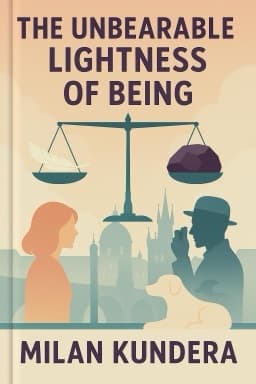
Love, Betrayal, and Freedom: The Emotional Rollercoaster in 'The Unbearable Lightness of Being'
How Kundera’s characters reveal the complexities of love, desire, and the human heart’s quest for meaning.

In Milan Kundera’s The Unbearable Lightness of Being, love is not a simple emotion but a complex dance of freedom, fidelity, and betrayal. The novel’s characters embody the contradictions and tensions inherent in human relationships, challenging conventional ideas about love and possession.
This evocative scene captures the volatile mix of joy and conflict that defines Tomas and Tereza’s relationship. Tomas’s desire for erotic freedom conflicts with Tereza’s longing for emotional fidelity, creating a fragile balance that is constantly tested.
Sabina introduces the concept of erotic friendship — a relationship model based on freedom without possessiveness or sentimentality. While this ideal offers liberation, it also exposes the vulnerability to jealousy and emotional pain, showing that human hearts rarely conform to neat categories.
Kundera explores how compassion deepens emotional bonds but also multiplies suffering. Shared pain can be heavier than individual grief, binding lovers in a complex web of responsibility and vulnerability. These emotional paradoxes reflect the broader themes of the novel — the interplay of lightness and weight in human existence.
Through letters, memories, and intimate moments, the novel reveals how love shapes identity and how betrayal fractures it. The characters’ struggles resonate because they mirror universal human experiences — the desire for connection, the fear of loss, and the quest for meaning in a chaotic world.
This blog invites you to explore these emotional depths, offering psychological insights and literary analysis that illuminate Kundera’s nuanced portrayal of love. Whether you are a fan of romantic literature or a seeker of psychological understanding, this exploration will enrich your appreciation of one of literature’s most profound love stories.
For further reading, see LitCharts Study Guide, Medium Literary Analysis, and eNotes In-Depth Analysis 1 2 3
Want to explore more insights from this book?
Read the full book summary