
5 Everyday Secrets Only an Undercover Economist Can See (And How They Affect Your Wallet!)
Unlocking the Invisible Forces That Shape Your Daily Decisions

Unlocking the Invisible Forces That Shape Your Daily Decisions
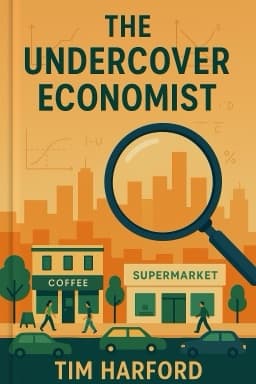
Have you ever wondered why your coffee costs more at the train station than at a shop a few blocks away? Or why supermarkets seem to know exactly how to nudge you into buying that extra treat? Tim Harford’s 'The Undercover Economist' pulls back the curtain on the hidden economic forces at work in our everyday lives, showing us that beneath every price tag and every choice is a story of scarcity, negotiation, and subtle power plays.
Let’s start with coffee. The price of your morning cappuccino isn’t just about the beans or the barista’s skill—it’s about location, location, location. Cafés near busy commuter hubs can charge more because they control a scarce resource: convenience. But who really profits? Often, it’s the landlord, not the coffee shop, who captures the value by charging high rent for prime spots.
Supermarkets are no less cunning. They use sales and product placement to segment shoppers. Bargain hunters are lured by random discounts, while those in a hurry or less price-sensitive pay full price. This is price discrimination in action, as businesses find clever ways to get each customer to reveal their willingness to pay. The result? You might be paying more than your neighbor for the same groceries, simply because you shop differently.
But the hidden logic doesn’t stop at the checkout. Harford explains how markets, when working perfectly, are like supercomputers—processing information from millions of buyers and sellers to set prices that reflect true value and cost. Yet, real life is messier. Information asymmetry—when one party knows more than the other—can unravel markets, as in the classic 'lemons problem' with used cars. Sellers know which cars are duds and which are gems, but buyers don’t, so good cars get driven out of the market.
Externalities—like pollution from cars or congestion on roads—are another hidden cost. When drivers clog up city streets, they impose delays and pollution on everyone else, costs that aren’t reflected in the price of a tank of gas. Harford argues that governments can step in with congestion charges or pollution taxes to make these invisible costs visible, nudging us towards choices that benefit the whole community.
One of the most empowering messages of the book is that economic thinking isn’t just for experts. By spotting incentives, questioning prices, and recognizing hidden costs, anyone can become an undercover economist in their own life. Whether you’re negotiating a raise, choosing a product, or voting on public policy, understanding these principles helps you make wiser, more impactful decisions.
In the end, Harford’s book isn’t just about economics—it’s about seeing the world with fresh eyes. Every transaction, every price, and every choice is a clue in the grand detective story of our lives. And once you know what to look for, you’ll never see the world the same way again.
Ready to uncover more hidden secrets? Dive deeper into the world of everyday economics and discover how you can turn invisible forces to your advantage!
Want to explore more insights from this book?
Read the full book summary