
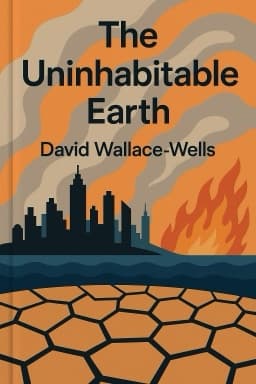
Climate Change Isn’t Just About Science—It’s About Us: Lessons from 'The Uninhabitable Earth'
How the Crisis Shapes Our Minds, Relationships, and Sense of Purpose

How the Crisis Shapes Our Minds, Relationships, and Sense of Purpose
Climate change is more than a scientific phenomenon; it is a deeply human story. In The Uninhabitable Earth, David Wallace-Wells explores how the crisis affects our minds, our relationships, and our sense of purpose. He describes the rise of climate anxiety, a new kind of grief that comes from watching familiar places change and futures become uncertain.
The book explores the narratives we use to make sense of chaos—sometimes minimizing risk, sometimes catastrophizing. Wallace-Wells discusses the ethical dilemmas faced by parents, such as whether to bring children into a world facing such uncertainty. He also highlights the ways in which climate change challenges our empathy, as we confront suffering both near and far.
But the book is not just about despair. Wallace-Wells emphasizes the importance of community—how compassion, solidarity, and shared action can help us adapt and thrive. He offers examples of communities coming together after disaster, supporting one another and rebuilding stronger.
Ultimately, the book calls for a new kind of hope—one rooted in action, not denial. It asks us to accept the reality of the crisis, but also to see ourselves as agents of change. By connecting with others, telling honest stories, and taking practical steps, we can find meaning and even joy amid the uncertainty.
Want to explore more insights from this book?
Read the full book summary