
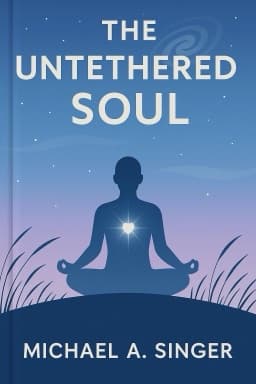
7 Mind-Blowing Lessons from The Untethered Soul That Will Change Your Life Forever
Unlock the secrets of inner freedom and self-realization with these actionable takeaways.

Lesson 1: You Are Not Your Thoughts
Imagine sitting quietly and suddenly noticing a constant stream of chatter in your mind. This is your inner monologue, narrating, judging, worrying, and reminiscing. Singer’s first breakthrough is the realization that you are not this voice. Instead, you are the awareness that hears it. This simple but radical shift in perspective is the foundation of inner freedom. Try this: next time you catch your mind racing, pause and ask, “Who is listening?” That’s you—the silent witness.
Lesson 2: Meet Your Inner Roommate
Think of your mind as a chatty, unpredictable roommate. Would you let a real roommate criticize, worry, and argue with themselves all day? Probably not. Yet, inside, we let this inner voice run wild. By personifying your mind, you create distance and can observe its antics with humor and compassion. This detachment is the first step to not letting it control your emotions or actions.
Lesson 3: The Power of Self-Inquiry
Who are you, really? Beyond your name, roles, and life story lies pure awareness. Singer invites us to ask, “Who sees when I see? Who knows that I am aware?” This inquiry reveals that our true identity is the unchanging witness behind all experiences—joys, sorrows, successes, and failures. When you rest in this awareness, life’s dramas lose their grip on you.
Lesson 4: Living Lucidly in Every Moment
Just as a lucid dreamer knows they are dreaming, you can become lucid in waking life. This means being fully present, aware of your thoughts and emotions as they arise, but not getting lost in them. When something triggers you, instead of reacting automatically, you observe: “Ah, anger is here.” This presence brings clarity, peace, and freedom from old patterns.
Lesson 5: Unlocking the Flow of Inner Energy
Have you ever felt a sudden rush of joy or inspiration? That’s your inner energy flowing freely. Singer explains that this energy is always available—unless we block it by closing our hearts. Old emotional wounds (called Samskaras) can trap this energy. The practice is simple but profound: when discomfort arises, relax, breathe, and let it pass through. Each time you do, you open a little more to life’s vitality.
Lesson 6: The Art of Letting Go
Freedom comes not from controlling life, but from letting go of resistance. When pain or fear arises, we often tense up or try to avoid it. Instead, Singer urges us to relax and surrender. Letting go isn’t passive—it’s an act of faith in your own strength and in life’s wisdom. The more you let go, the lighter and more joyful you become.
Lesson 7: Unconditional Happiness and the Middle Way
The ultimate goal is to live with an open heart, embracing every moment—pleasant or painful. Unconditional happiness doesn’t mean you never feel sad or angry; it means you don’t close yourself off when these feelings arise. By walking the Middle Way—not clinging to pleasure or resisting pain—you discover a peaceful, resilient joy that nothing can shake.
These seven lessons are not just ideas—they are practices to transform your daily life. As Singer writes, “You truly can reach a state in which you never have any problems, only situations to deal with.” Start today: observe your thoughts, meet your inner roommate, rest in awareness, live lucidly, open your heart, let go, and embrace every moment. The journey is yours to begin.
References:
2
4
1
Want to explore more insights from this book?
Read the full book summary