
The Secret History of Knowledge: How Writing, Math, and Law Built Our World
The Hidden Tools That Made Civilization Possible

The Hidden Tools That Made Civilization Possible
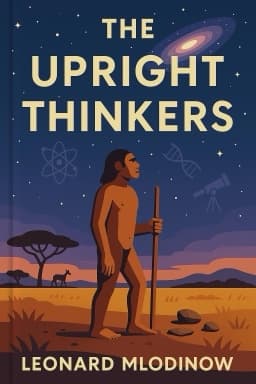
What if the most powerful inventions in history weren’t weapons or machines, but ideas? In 'The Upright Thinkers,' Leonard Mlodinow uncovers the hidden tools that turned scattered bands of humans into thriving civilizations.
Writing was the first revolution. Before the written word, knowledge vanished with each generation. With clay tablets and ink, memory became history, and wisdom could be shared across time and space. The world’s first schools and libraries turned learning into a communal project.
Mathematics was the second. With numbers, people could measure, plan, and build. From the pyramids to irrigation canals, math made the impossible possible. It also unlocked the patterns of nature, paving the way for science.
Law was the third. Codified rules brought order to society and made life more predictable. Early laws blended the spiritual with the practical, governing both human behavior and the rhythms of the cosmos. Justice, fairness, and accountability became the pillars of civilization.
These inventions didn’t just solve immediate problems—they created the conditions for progress. Trade, architecture, science, and democracy all depend on the tools of knowledge. Understanding their origins helps us see how fragile—and how precious—our civilization truly is.
Next time you pick up a book, solve a puzzle, or debate a rule, remember: you are part of a story that began thousands of years ago, with the simple desire to know, to build, and to belong.
Want to explore more insights from this book?
Read the full book summary