
Why Science Is Humanity’s Greatest Adventure (And How You Can Join In)
Turning Questions into Breakthroughs—From Ancient Greece to Quantum Physics

Turning Questions into Breakthroughs—From Ancient Greece to Quantum Physics
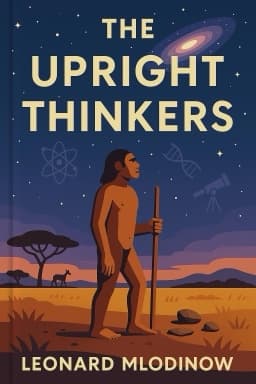
Science isn’t just a subject in school—it’s the greatest adventure story ever told. In 'The Upright Thinkers,' Leonard Mlodinow shows how the quest to understand our world has taken humanity from counting sheep to splitting atoms.
It all began with a question. Why do the stars move? What makes the seasons change? In ancient Greece, thinkers like Thales and Aristotle dared to look beyond myth and search for natural explanations. Their debates and discoveries laid the groundwork for everything that followed.
The Renaissance was a time of fearless experimentation. Galileo pointed his telescope at the sky and saw worlds no one had imagined. Newton’s apple became a symbol of inquiry, leading to laws that united earth and sky. Every breakthrough was born from the courage to ask, 'What if?' and to risk being wrong.
In the 20th century, the adventure reached new heights. Quantum physicists discovered a universe stranger than fiction, where particles can be in two places at once and uncertainty is woven into reality. Yet, instead of giving up, scientists embraced the unknown, knowing that every mystery is an invitation to explore.
So how can you join this adventure? Start by nurturing your curiosity. Ask questions, read widely, experiment—even fail, and try again. Science is a community, not a competition. Share your ideas, listen to others, and remember: the next great discovery could begin with your question.
Science is not just about answers—it’s about the joy of seeking. Join the journey. The adventure is waiting for you.
Want to explore more insights from this book?
Read the full book summary