
Why Everything You Know About Value Creation Is Wrong (And What You Should Learn Instead)
Unmasking the Myths That Shape Our Economy

Unmasking the Myths That Shape Our Economy
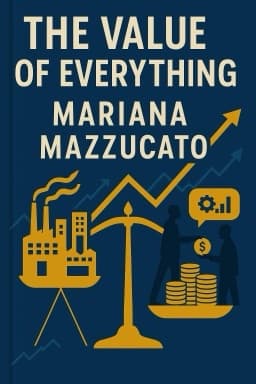
What if the stories you’ve heard about who creates wealth—and who deserves it—were more fiction than fact? Mariana Mazzucato’s 'The Value of Everything' is a clarion call to rethink the foundations of our economic beliefs. From the first page, the book invites us to question the invisible scripts that justify inequality, reward speculation, and underplay the role of collective effort in building prosperity.
Consider the concept of value itself. For centuries, economists and policymakers have drawn—and redrawn—the line between 'makers' and 'takers.' In 18th-century France, only the land and those who worked it were seen as productive. The industrial revolution shifted the spotlight to factories and laborers. Today, in a world dominated by finance, speculation, and digital platforms, almost any activity that fetches a price in the market is labeled as value-creating. This evolution is not a story of progress, but of power—of who gets to define value and who benefits from that definition.
But why does this matter? Because these stories shape policy, reward structures, and even our sense of what is possible. When financiers are celebrated as 'wealth creators' while teachers and caregivers are dismissed as costs, the consequences are real: policies tilt toward deregulation, short-term profits, and rising inequality. Mazzucato’s book is full of striking examples, such as the astronomical rise of the financial sector’s share of GDP and the epidemic of share buybacks that enrich executives but starve innovation.
Perhaps most eye-opening is the book’s exploration of the public sector’s hidden role in innovation. The internet, GPS, and countless medical breakthroughs were not the products of lone geniuses or venture capitalists, but of patient, risky investment by governments and public institutions. Yet, the rewards of these breakthroughs are often privatized, while the risks are socialized. This is not just unfair—it’s unsustainable.
So, what can we do? The first step is to reclaim the narrative. We must demand measures of progress that reflect what truly matters—well-being, sustainability, and shared prosperity. We must celebrate the real value creators, from scientists and engineers to caregivers and teachers, and design policies that reward them accordingly. Only then can we build an economy that works for everyone, not just the lucky few.
Ready to challenge your assumptions? Dive into 'The Value of Everything' and discover how changing our stories can change our world.
Want to explore more insights from this book?
Read the full book summary