
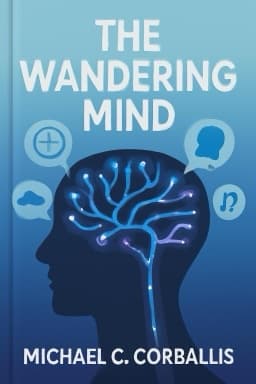
From Daydreams to Dreams: The Neuroscience of Mental Time Travel and Creativity
How your brain journeys through past, present, and future to inspire creativity and emotional healing.

Mental time travel is the remarkable ability of the human mind to transcend the present moment, revisiting the past and envisioning the future. This faculty is deeply rooted in the hippocampus, a brain region that integrates spatial and temporal information to form cognitive maps.
The default mode network (DMN) supports this process by activating during rest and mind wandering, allowing the brain to simulate scenarios that help in planning, decision-making, and problem-solving. For example, imagining a future event involves recombining elements of past memories into novel configurations.
Dreams represent the nighttime extension of mental time travel. During REM sleep, the brain weaves together fragments of memories and emotions into vivid narratives. These dreams may serve adaptive functions such as threat simulation, emotional regulation, and memory consolidation.
Creative insights often emerge from these mental journeys. Incubation periods—times when we disengage from focused effort—allow unconscious processing to forge new connections between ideas. Many famous inventions and artworks have roots in such moments of mental freedom.
Understanding the neuroscience of mental time travel and dreams offers powerful insights into how we can harness these natural processes for creativity, emotional healing, and personal growth.
References:
- Dreaming as Mind Wandering - PMC 2
- Mind-wandering as Creative Thinking - ResearchGate 3
- Relations between Imagination and Creativity - ResearchGate 4
Want to explore more insights from this book?
Read the full book summary