
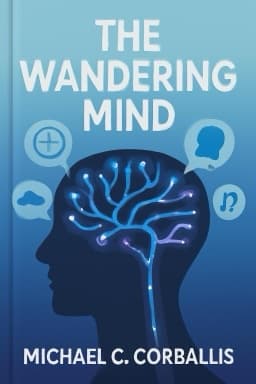
Hallucinations and the Creative Mind: When Perception Breaks Free
Explore how hallucinations reveal the brain’s ability to generate reality and inspire creativity.

Hallucinations challenge our understanding of reality by showing that the brain can produce vivid sensory experiences independent of the outside world. Far from mere errors, these phenomena reveal the brain’s remarkable creativity and its active role in shaping perception.
Electrical stimulation of the temporal lobe has been shown to evoke detailed auditory and visual hallucinations, illustrating that specific brain regions generate sensory content. Moreover, sensory deprivation experiments reveal that when external input is reduced, the brain compensates by creating internal experiences.
Hallucinations appear in various contexts, from neurological disorders like epilepsy to psychedelic drug use and extreme isolation. These states blur the line between real and imagined, offering insights into how perception and imagination intertwine.
Interestingly, the creative mind often treads close to these boundaries, with many artists and writers drawing inspiration from altered perceptions and visionary experiences.
Understanding hallucinations enriches our appreciation of the brain’s complexity and its capacity to generate multiple layers of reality, fueling both challenges and creativity.
References:
- Mind Wandering and the Intuitive Psychology Mode - NCBI 1
- Dreaming as Mind Wandering - PMC 2
Want to explore more insights from this book?
Read the full book summary