
The Great Displacement Is Here: What Every Worker Needs to Know Now
Understanding the Massive Job Losses and How to Prepare for the Future

Understanding the Massive Job Losses and How to Prepare for the Future
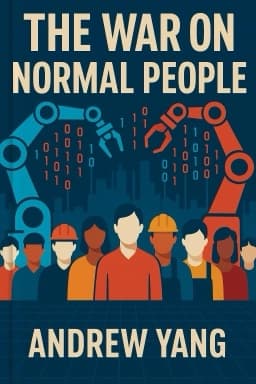
Automation is no longer a distant threat looming on the horizon; it is here, reshaping the American economy and labor market in profound ways. Andrew Yang’s concept of the 'Great Displacement' captures this reality—millions of jobs once held by middle-class Americans are disappearing, replaced by machines and software that can perform tasks more efficiently.
Since 2000, the U.S. has lost over 4 million manufacturing jobs, a decline driven primarily by automation rather than outsourcing. Retail jobs are vanishing as e-commerce grows, with over 100,000 department store workers laid off in a single year. Driving jobs, the most common occupation in nearly 30 states, face extinction due to self-driving trucks and cars. Clerical jobs are rapidly being automated with AI chatbots and software, threatening hundreds of thousands of positions.
This transformation is not just about numbers; it deeply affects the 'normal people'—those without college degrees who rely on these jobs to support their families. The median personal income for these workers hovers around $31,000, and many have less than $500 in savings, making them vulnerable to economic shocks.
The social consequences are alarming. As jobs disappear, disability claims rise, mental health issues become widespread, and family structures weaken. Communities built around stable employment face decline, and economic inequality widens. Marriage rates fall, and substance abuse increases, painting a grim picture of the human cost behind the statistics.
Yang’s vision includes Universal Basic Income, a guaranteed payment to every adult to provide financial security regardless of employment. This idea has been tested globally, showing promising results in improving well-being and fostering entrepreneurship. Additionally, Human Capitalism proposes an economic system that prioritizes people’s welfare, equity, and dignity over mere profit maximization.
Preparing for this future requires rethinking education, health care, and social support systems. Vocational training, decoupling health insurance from jobs, and fostering community engagement through social currencies are all part of the solution.
The Great Displacement challenges us to rethink what work means and how society values human contribution. It is a call to action for policymakers, businesses, and individuals to create a future where technology uplifts rather than displaces.
Stay with us as we unpack these ideas, explore real-world examples, and envision pathways to a more inclusive and resilient economy.
Want to explore more insights from this book?
Read the full book summary