
Universal Basic Income: The Radical Idea That Could Save Our Economy
How a Guaranteed Income Could Transform Lives in an Automated World

How a Guaranteed Income Could Transform Lives in an Automated World
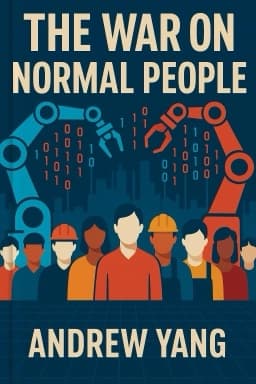
As automation accelerates, displacing millions of workers, the question arises: how do we ensure no one is left behind? Andrew Yang’s The War on Normal People champions Universal Basic Income (UBI)—a fixed, unconditional payment to every adult—as a solution to provide economic security and dignity in an uncertain future.
UBI is not just a theoretical concept; it has been tested in countries like Finland, Canada, and the United States, yielding promising results. Participants report improved mental health, increased financial stability, and greater entrepreneurial activity. Unlike traditional welfare, UBI is simple, universal, and removes stigmas associated with means-tested benefits.
Funding UBI poses challenges, but creative solutions exist. Yang proposes a value-added tax (VAT) on consumption, which can generate substantial revenue while encouraging efficient resource use. This approach shifts taxation away from income and toward spending, aligning incentives with sustainability.
Beyond cash payments, innovations like time banking and social currencies reward community service and caregiving, fostering social cohesion and purpose. These systems complement UBI by recognizing diverse forms of contribution beyond paid employment.
UBI represents a paradigm shift in social policy, decoupling income from employment and redefining how society supports its members. It challenges us to rethink work, value, and human potential in an age of rapid technological change.
As we explore these ideas, it becomes clear that UBI is more than a policy—it is a foundation for a fairer, more resilient economy that embraces the future rather than fears it.
Want to explore more insights from this book?
Read the full book summary