
Why Your Job Might Disappear Sooner Than You Think — And What You Can Do About It
Facing the Reality of Automation and Preparing for a Changing Job Market

Facing the Reality of Automation and Preparing for a Changing Job Market
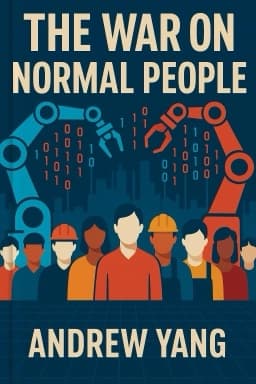
Automation is advancing at a pace that many do not fully appreciate. Jobs once thought safe are now vulnerable to machines and algorithms that can perform repetitive and even complex tasks with greater efficiency and lower cost. Andrew Yang’s The War on Normal People highlights the urgency of this reality, showing that millions of middle-class jobs in retail, driving, clerical work, and fast food service are disappearing today.
Retail is in crisis, with hundreds of stores and malls closing annually. Department store layoffs exceeded 100,000 in a recent year, outpacing losses in coal mining. Call centers are rapidly adopting AI chatbots, automating 40-50% of customer service tasks. Fast food chains invest in robotic arms and kiosks that prepare and serve food efficiently, threatening millions of low-wage jobs.
Driving jobs, the most common occupation in nearly 30 states, face extinction with the rise of self-driving trucks and cars. This shift will ripple through supply chains and local economies, affecting millions beyond just drivers.
The human impact is stark. Many displaced workers turn to disability benefits as a last resort, with some regions reporting up to 20% of working-age adults on disability rolls. Social problems like substance abuse, depression, and family instability rise as economic insecurity grows.
To address these challenges, Yang proposes Universal Basic Income—a fixed income for all adults to ensure financial security amid job loss. Vocational training programs offer practical pathways to new careers, emphasizing hands-on skills over traditional degrees. Education and health care reforms are also essential to support workers in transition.
Individuals can future-proof their careers by developing adaptable skills, embracing lifelong learning, and exploring roles that require creativity and human empathy—areas where machines currently lag.
Ultimately, society must rethink how work, income, and dignity intersect in a world transformed by technology. This is not just a challenge but an opportunity to build a more inclusive and humane economy.
Continue reading to discover how these ideas come together in a vision for a hopeful future.
Want to explore more insights from this book?
Read the full book summary