
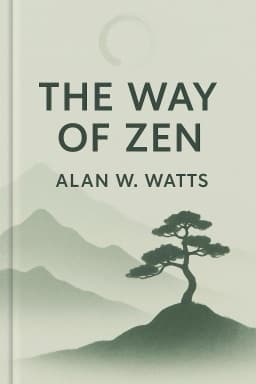
Unlocking the Mysteries of Zen: How Ancient Wisdom Can Transform Your Modern Life
Discover the profound teachings of Zen and how its blend of Taoist flow and Buddhist awakening offers a path to peace and clarity in our chaotic world.

In a world often overwhelmed by noise, distraction, and relentless pursuit of control, the ancient wisdom of Zen Buddhism offers a refreshing and transformative perspective. Rooted in the seamless fusion of Taoist naturalness and Mahayana Buddhist insight, Zen invites us to awaken to the present moment with clarity, compassion, and effortless ease.
The Tao: The Indefinable Flow of Life
Zen’s journey begins with the Tao, the ineffable 'Way' that underlies all existence. The Tao cannot be fully captured by words or concepts, reminding us that the deepest truths are felt and lived rather than intellectually grasped. The Tao teaches wu-wei — effortless action in harmony with nature — like a river flowing around stones without resistance. This principle encourages us to embrace spontaneity and let go of forced control, opening the door to naturalness and peace.
Buddhism’s Middle Way: The Path Beyond Suffering
Building on this foundation, the Buddha’s awakening introduced the Middle Way — a balanced path between extremes of indulgence and asceticism. Central to this is the recognition of suffering (duhkha) arising from clinging to impermanent things. By following the Eightfold Path, practitioners cultivate wisdom, ethical conduct, and mental discipline, gradually freeing themselves from craving and ignorance.
Mahayana’s Vision: Compassion and Emptiness
Mahayana Buddhism expands the path with the ideal of the Bodhisattva — one who vows to remain in the world to help all beings awaken. Its doctrine of emptiness (sunyata) reveals that all phenomena lack inherent self-nature and exist interdependently. This profound insight dissolves separateness and fuels boundless compassion, transforming spiritual practice into a universal mission.
Zen’s Unique Path: Direct Experience Beyond Words
Zen emerged as a vibrant synthesis of Taoism’s naturalness and Mahayana’s awakening, emphasizing direct experience beyond conceptual thought. The famous Flower Sermon story symbolizes this wordless transmission of insight. Zen practice centers on za-zen — seated meditation cultivating no-mind, a state of spontaneous, unobstructed awareness free from ego and duality.
Koan Practice: Breaking Through the Mind’s Cage
To deepen awakening, Zen uses koans — paradoxical questions that exhaust rational thought and provoke intuitive insight. Guided by a master, practitioners engage with these enigmatic challenges to transcend conceptual barriers and experience spontaneous realization.
Living Zen: Simplicity, Spontaneity, and Presence
Beyond meditation, Zen permeates art and daily life through simplicity and mindfulness — from the minimalist beauty of rock gardens and haiku poetry to the mindful grace of tea ceremonies and calligraphy. These expressions invite us to live fully in each moment, appreciating the natural flow of existence.
In embracing Zen’s timeless wisdom, we find a path that transcends dogma and intellectualization, opening us to the marvel of life itself — effortless, spontaneous, and deeply present.
Sources: sobrief.com, amazon.com, shambhala.com, university at buffalo research guides 2 , 1 , 3 , 4
Want to explore more insights from this book?
Read the full book summary