
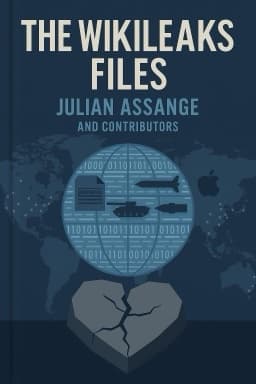
Inside the Shadow Empire: What WikiLeaks Revealed About US Global Power
Unveiling the hidden machinery of American global dominance through leaked diplomatic cables

For decades, the United States has portrayed itself as the champion of democracy, human rights, and global stability. Yet beneath this polished narrative lies an empire sustained by secrecy, coercion, and a sprawling network of diplomatic, military, and intelligence operations. The unprecedented leak of over two million diplomatic cables by WikiLeaks in 2010 shattered the veil of silence, exposing the raw mechanics of US global dominance.
These documents revealed a world where official rhetoric often masked harsh realities. The US government’s vast diplomatic network, comprising 169 embassies staffed by over 71,000 personnel from 27 agencies, functions not only as a channel for diplomacy but as a hub for intelligence gathering, covert operations, and influence peddling. Inside these embassies, diplomats and spies work side by side, navigating a labyrinth of secrecy that protects the empire’s interests.
The leaks exposed the contradictions at the heart of US foreign policy. While publicly promoting democracy and human rights, the US has long supported authoritarian regimes when convenient. Military aid flows to despots described as corrupt or incompetent if they serve strategic goals, such as securing access to Afghanistan or controlling regional resources. This realpolitik approach prioritizes stability and influence over ideals, often at the expense of oppressed populations.
War, framed as a fight for freedom and security, emerges from the leaks as a brutal enterprise marked by moral ambiguity and often blatant violations. Guantánamo Bay detainees held without charge, widespread civilian casualties concealed from public view, and the use of torture reveal a darker side of the 'war on terror.' The redefinition of terms like 'terrorist' and 'enemy combatant' serve to justify extraordinary measures that undermine legal norms and human rights.
On the economic front, the empire’s reach extends through trade agreements and corporate influence. Leaked cables show how multinational corporations collude with governments to exploit resources, suppress regulations, and prioritize profits over people and the environment. Agreements like the Trans-Pacific Partnership exemplify how economic policies entrench US dominance by privileging investor rights over national sovereignty.
Regionally, the US tailors its tactics to local realities. In the Middle East, control over oil resources drives a complex web of alliances and interventions. Latin America experiences a legacy of coups and covert operations, evolving into economic and political influence. Asia and Africa are arenas for strategic partnerships and resource competition, all aimed at preserving US primacy.
The human cost of this empire is staggering. Millions suffer displacement, trauma, and death as a result of wars, sanctions, and covert actions. Moreover, the phenomenon of blowback—where policies intended to secure safety instead fuel extremism and resentment—illustrates the perilous consequences of unchecked power.
Yet, the story is not solely one of domination and despair. The courage of whistleblowers and the power of transparency, as embodied by WikiLeaks, have challenged the empire’s secrecy. The release of classified documents has empowered public scrutiny, sparked social movements, and forced reconsideration of entrenched policies.
As we move forward, the lessons from these revelations urge a reimagining of global relations—one grounded in openness, justice, and respect for human dignity. The empire’s stones, once hidden, are now visible, inviting us to build a future beyond shadows.
Sources: 1 , 3 , 4
Want to explore more insights from this book?
Read the full book summary