
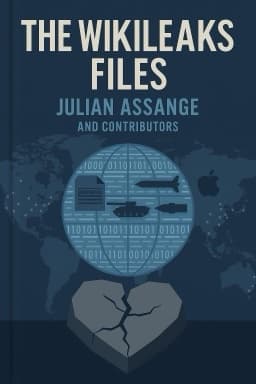
The Dark Side of American Diplomacy: Secrets from the WikiLeaks Cables
How leaked diplomatic communications reveal the contradictions and covert actions behind US foreign policy

The ideal of diplomacy often conjures images of peaceful negotiation, mutual respect, and the pursuit of common good. However, the WikiLeaks diplomatic cables reveal a far more complex and troubling reality. Behind the polished statements and official communiqués lies a shadow world where diplomacy serves as a tool of power projection, intelligence gathering, and covert influence.
The US diplomatic network is a sprawling apparatus integrating multiple government agencies, including the CIA, NSA, and military intelligence. This integration blurs the lines between overt diplomacy and covert operations. Embassies serve as hubs not only for political engagement but also for espionage, surveillance, and paramilitary activities.
The cables expose how the US maintains alliances with authoritarian regimes, often described in unflattering terms by its own diplomats. These relationships are driven by strategic considerations such as military access, resource control, and regional stability. The famous phrase attributed to Franklin D. Roosevelt about supporting a 'son of a bitch' underscores the pragmatic, if cynical, approach to foreign partners.
Human rights and democracy promotion often serve as rhetorical cover for realpolitik. The US selectively applies these principles, supporting opposition groups in some countries while ignoring abuses in others. This selective enforcement undermines the credibility of American diplomacy and fuels anti-US sentiment globally.
War and counterterrorism efforts further complicate the picture. The cables reveal the use of extraordinary rendition, secret prisons, and torture, practices that contradict international law and stated US values. The redefinition of 'terrorism' and the expansion of executive powers create legal gray zones that enable these actions.
Economic diplomacy also plays a critical role. The US leverages trade agreements, corporate lobbying, and financial institutions to shape global markets in its favor. Leaked documents highlight corporate collusion, environmental degradation, and the prioritization of investor rights over public welfare.
These revelations challenge the narrative of the US as an exceptional force for good. They invite a critical reassessment of diplomacy as practiced by a global hegemon, emphasizing the need for transparency, accountability, and adherence to international norms.
Sources: 1 , 2 , 4
Want to explore more insights from this book?
Read the full book summary