
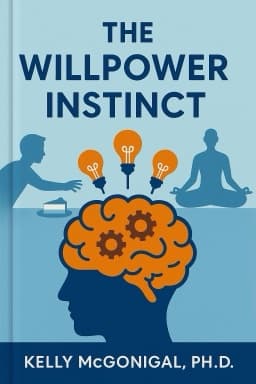
Master Your Mind: How Mindfulness and Acceptance Boost Willpower
Learn why fighting your urges backfires and how mindful acceptance can free your willpower

Have you ever tried not to think about something, only to find it dominating your thoughts even more? This common experience reveals a surprising truth about willpower and self-control.
The Ironic Rebound Effect
When you try to suppress a thought or craving, your mind paradoxically focuses on it more intensely. This ironic rebound effect explains why telling yourself 'don’t think about that cookie' makes it harder to resist. Your brain is wired to monitor what you’re trying to avoid, making suppression a losing battle.
Mindfulness and Acceptance as Powerful Allies
Instead of fighting your urges, mindfulness teaches you to observe them without judgment or reaction. Imagine sitting beside a river, watching leaves float by — the cravings are the leaves, passing without needing to be caught or pushed away.
This acceptance reduces the emotional charge of cravings and helps you respond thoughtfully. Techniques like breath awareness, body scans, and labeling thoughts can strengthen this skill.
Scientific Support
Neuroscience shows that mindfulness practice enhances prefrontal cortex function and reduces activity in brain regions associated with craving and stress. People recovering from addiction who use acceptance-based strategies have better outcomes and fewer relapses.
Practical Tips
- Practice daily mindfulness meditation, even for a few minutes.
- When cravings arise, notice them fully without acting.
- Label the craving as 'just a thought' or 'just an urge.'
- Allow the feeling to pass like a wave.
By mastering your mind with mindfulness and acceptance, you free your willpower from the exhausting cycle of resistance and open the door to lasting change.
References: 1 , 3
Want to explore more insights from this book?
Read the full book summary