
Inside the Mind of Innovation: How Tacit Knowledge Powers Breakthroughs
Explore the invisible forces behind creativity and how organizations can harness tacit knowledge.

Innovation often appears as a sudden spark of genius, but beneath that flash lies a deep well of tacit knowledge — the unspoken skills, intuitions, and experiences that individuals carry within them. This blog peels back the layers to reveal how tacit knowledge operates and why it is central to organizational innovation.
The Invisible Knowledge We Carry
Tacit knowledge is inherently personal and context-dependent. It is what allows a craftsman to create a masterpiece or a leader to make wise decisions under uncertainty. Unlike explicit knowledge, it cannot be fully articulated or written down.
Philosophers like Aristotle called this practical wisdom or phronesis — the ability to act rightly in particular situations. Modern neuroscience supports this by showing how mirror neurons enable empathy and learning through observation, making knowledge sharing a deeply embodied and social process.
The SECI Model: Converting Tacit to Explicit and Back
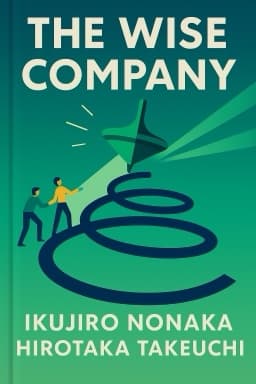
Nonaka and Takeuchi’s SECI model explains how organizations convert tacit knowledge into explicit knowledge and vice versa through four modes: Socialization, Externalization, Combination, and Internalization. This continuous conversion creates a spiral of knowledge that grows and spreads throughout the organization.
For example, apprentices learn tacit skills by working alongside experts (socialization). These insights are then expressed in concepts or models (externalization), combined with other explicit knowledge (combination), and finally internalized through practice (internalization).
Creating Ba: The Shared Space for Knowledge Creation
Organizations foster tacit knowledge exchange by creating 'ba' — shared physical, virtual, or mental spaces that cultivate trust and interaction. Whether it’s a collaborative workspace, a community of practice, or informal gatherings, ba enables the socialization and externalization processes vital for innovation.
Leadership and Culture: Sustaining Tacit Knowledge
Leadership that values storytelling, mentorship, and creating shared meaning nurtures tacit knowledge. Cultures that encourage openness, experimentation, and reflection help sustain the knowledge spiral and enable breakthroughs.
Understanding and harnessing tacit knowledge is key for organizations aspiring to innovate continuously and adapt to complex challenges.
References: Synthesized from The Knowledge-Creating Company, neuroscience studies, and innovation theory. 1 2 4
Want to explore more insights from this book?
Read the full book summary