
How Joan Didion’s 'The Year of Magical Thinking' Teaches Us to Survive the Unthinkable
Discover the raw honesty and transformative wisdom in Didion’s modern classic on grief.

Discover the raw honesty and transformative wisdom in Didion’s modern classic on grief.
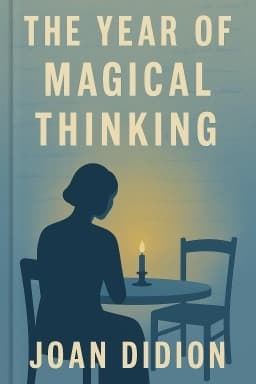
Joan Didion’s 'The Year of Magical Thinking' opens with a dinner table—a scene so ordinary, so steeped in routine, that its shattering transformation is all the more devastating. In a single instant, Didion’s world is upended by the sudden death of her husband, John Gregory Dunne. What follows is not a linear journey through grief, but an immersive plunge into its unpredictable, physical, and psychological depths. Didion’s willingness to document every detail, from the timestamp on her computer files to the arrangement of her husband’s shoes, offers an unfiltered view of mourning, one that rejects tidy stages and embraces the chaos of real loss.
Her writing is not just memoir, but a study of survival. Didion’s grief is physical—tightness in the throat, exhaustion, a fog that clouds every thought. She describes the 'waves' of emotion that strike without warning, echoing the observations of psychologists and survivors alike. Yet, even as she is swept away by pain, Didion clings to routines. Making coffee, organizing bills, and maintaining daily rituals become acts of resistance, small anchors in a sea of uncertainty. These habits, she admits, are both a comfort and an illusion—a way to pretend that life can be controlled, even as its fragility is exposed.
Central to Didion’s experience is what she calls 'magical thinking.' Despite knowing her husband is gone, she cannot bring herself to give away his shoes. She avoids certain rituals, convinced—on some irrational level—that he might still return. This magical thinking is not unique to Didion; psychologists recognize it as a universal response to trauma, a way for the mind to buffer itself against the unbearable finality of death. Didion’s honesty about this irrational hope is both heartbreaking and deeply relatable, showing how the mind will do anything to protect itself from loss.
Memory, too, plays a double-edged role. Didion revisits old letters, photographs, and shared jokes, finding both solace and pain in their recollection. Her marriage was a partnership built on mutual dependence and creative collaboration, making the loss not just of a spouse, but of a shared identity. Through writing, Didion imposes order on chaos, using narrative as a tool for healing. Her prose is precise, lyrical, and unflinching, capturing the complexity of grief in a way that resonates with anyone who has loved and lost.
As Didion moves through public ceremonies and private rituals, she explores the difference between communal and solitary mourning. Funerals, music, and memorials provide structure, while personal acts—like giving away possessions—mark the slow acceptance of reality. Didion’s journey is not about forgetting, but about integrating loss into the fabric of daily life. Her resilience emerges gradually, marked by setbacks and small victories, until hope begins to return, quietly and persistently.
In the end, 'The Year of Magical Thinking' is a story of endurance, love, and the transformative power of storytelling. Didion’s willingness to share her most vulnerable moments offers comfort to countless readers, proving that while grief may never fully end, it can be survived—and even transformed. For anyone facing loss, Didion’s memoir is a guide, a friend, and a testament to the enduring bonds of love.
Want to explore more insights from this book?
Read the full book summary