
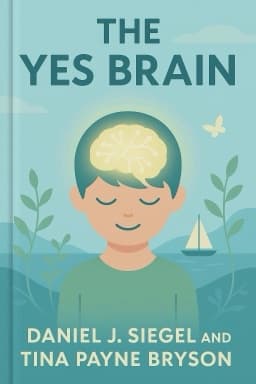
Unlock Your Child’s Hidden Superpower: The Yes Brain Revolution You Can’t Ignore!
Discover how cultivating the Yes Brain can transform your child’s emotional world and set them up for lifelong success.

Imagine a brain that says "yes" to life—embracing new experiences, managing emotions with grace, and bouncing back from setbacks stronger than ever. This is the essence of the 'Yes Brain,' a transformative concept reshaping how we understand child development and parenting. Rooted in cutting-edge neuroscience, the Yes Brain approach teaches us that children's mental strength is not fixed but can be nurtured through intentional connection and skill-building.
What is the Yes Brain? At its core, the Yes Brain represents a state of openness, receptivity, and integration within the brain. Unlike the reactive 'No Brain,' which triggers fight, flight, freeze, or faint responses, the Yes Brain fosters flexibility, curiosity, and emotional balance. Neuroscience reveals that this state arises from the harmonious functioning of different brain regions, especially the prefrontal cortex, which governs executive functions like decision-making and impulse control.
Why does this matter? Because children with a well-integrated Yes Brain are better equipped to handle life's inevitable challenges. They stay calm under pressure, recover quickly from emotional upsets, and engage positively with others. This foundation supports not only academic success but also meaningful relationships and overall well-being.
The Four Pillars of the Yes Brain
- Balance: Emotional regulation is the cornerstone. Children learn to stay in the 'green zone'—a calm, receptive state—rather than swinging into hyperarousal or shutdown.
- Resilience: The ability to bounce back from adversity by developing coping skills and a growth mindset.
- Insight: Cultivating self-awareness and the power of the pause, enabling thoughtful responses rather than impulsive reactions.
- Empathy: Expanding connection and compassion towards others, building social intelligence and kindness.
Parents play a vital role in nurturing these pillars through empathetic connection, co-regulation, and teaching. For example, when a child is upset, connecting first with empathy before redirecting behavior helps them calm and learn more effectively. Mindfulness practices and naming emotions ('name it to tame it') build insight, while encouraging perspective-taking fosters empathy.
Rethinking Success
The Yes Brain challenges traditional notions of success focused solely on external achievements. Instead, it emphasizes 'eudaimonia'—lasting happiness through meaning and authentic connection. This holistic approach prepares children for a rich life filled with joy, resilience, and purpose, rather than fleeting pleasure or perfectionism.
Practical Takeaways for Parents
Integrating Yes Brain principles daily can make parenting more peaceful and rewarding. Simple steps include creating moments of connection, practicing mindful listening, encouraging emotional vocabulary, and balancing challenges with support ('pushin’ and cushion'). These strategies foster a positive feedback loop that strengthens brain integration and mental strength over time.
Final Thoughts
The Yes Brain is more than a parenting method; it is an invitation to embrace growth, connection, and compassion in raising resilient children. By nurturing the Yes Brain, we empower the next generation to navigate an ever-changing world with courage and heart.
For anyone seeking a hopeful, science-backed roadmap to parenting, the Yes Brain offers profound insights and practical tools to unlock your child’s hidden superpower.
Sources: Dr. Dan Siegel's The Yes Brain, Amazon overview, Sobrief summary
Want to explore more insights from this book?
Read the full book summary