
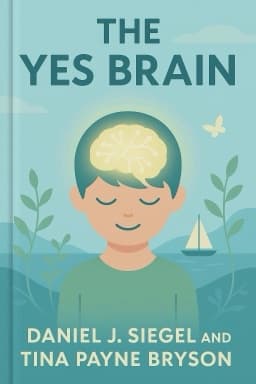
Why Your Child’s Brain Says NO—And How to Turn It Into a YES!
Understanding the No Brain state and strategies to cultivate a Yes Brain for happier, calmer kids.

Every parent has faced moments when their child seems unreachable—locked in a tantrum, frozen in fear, or shutting down completely. These moments can feel like a battle against an uncooperative brain. But what if we understood these behaviors not as defiance but as the brain’s survival mode kicking in? Welcome to the world of the 'No Brain.'
What is the No Brain? The No Brain represents the brain’s reactive state, dominated by the lower brain regions responsible for survival instincts. When a child feels threatened, overwhelmed, or unsafe, the No Brain triggers fight, flight, freeze, or faint responses. This state shuts down higher-order thinking and emotional regulation, making reasoning or discipline ineffective.
Why does this happen? The brain prioritizes safety above all. When the upstairs brain (prefrontal cortex) is offline due to stress, the downstairs brain (limbic system and brainstem) takes over. This leads to rigid, reactive behavior aimed at immediate survival.
Traditional parenting methods that rely on punishment or logical explanations during these moments often backfire because the child’s brain is not in a receptive state. Instead, what children need is connection—a calming, empathetic presence that helps them regulate and return to the Yes Brain.
Moving from No Brain to Yes Brain
Turning a 'no' into a 'yes' involves fostering brain integration. This means strengthening the connections between the upstairs and downstairs brain. Parents can do this by:
- Recognizing signs of No Brain activation, such as intense emotional outbursts or shutdowns.
- Providing co-regulation through calm, empathetic interaction.
- Teaching skills like deep breathing, naming emotions, and mindfulness to expand the child’s window of tolerance.
- Balancing challenge with support—pushing gently while cushioning with love.
For example, a child overwhelmed by a crowded birthday party might be helped by a parent offering a quiet space and validating feelings before encouraging re-engagement. Over time, these experiences build new neural pathways supporting the Yes Brain state.
Why This Matters
Understanding the No Brain explains why children sometimes behave in ways that seem irrational or oppositional. It shifts the parenting paradigm from punishment to connection and skill-building. This approach not only improves behavior but also nurtures lifelong mental strength.
By learning to recognize and respond to the No Brain, parents can help their children develop the courage, curiosity, and resilience that define the Yes Brain.
Sources: Dr. Dan Siegel's The Yes Brain, Sobrief summary, Amazon overview
Want to explore more insights from this book?
Read the full book summary