
How ‘Thick’ Challenges the Beauty Industry’s Racist Standards and Empowers Black Women
Deconstructing Whiteness as the Beauty Ideal and Celebrating Blackness as Power

Deconstructing Whiteness as the Beauty Ideal and Celebrating Blackness as Power
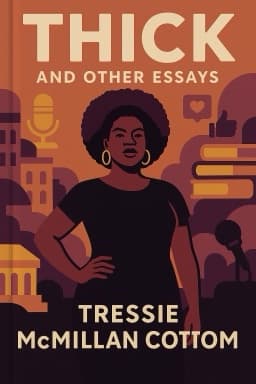
Beauty is often viewed as a personal choice or aesthetic preference, but in Thick: And Other Essays, Tressie McMillan Cottom reveals it as a deeply racialized and political system.
The beauty industry thrives by promoting ideals that are often unattainable for black women without significant financial and emotional cost. This creates a cycle where conformity to these standards requires constant labor—hair treatments, skin lightening, makeup—and yet often fails to confer full acceptance or power.
Cottom introduces the concept of symbolic violence to describe the psychological harm inflicted when black women internalize these oppressive beauty norms. This violence splits identity and self-worth, making it difficult to fully embrace natural beauty or alternative aesthetics.
Yet resistance flourishes. Black women have long challenged dominant beauty ideals through cultural expressions like natural hair movements, hip-hop fashion, and literature that celebrate blackness unapologetically. These acts of cultural reclamation are political—they assert the validity and beauty of black bodies and identities.
Consider how black feminist aesthetics create spaces where black women define their own standards of beauty and desirability, rejecting exclusionary norms. This redefinition is a form of empowerment and a challenge to the capitalist structures profiting from exclusion.
By understanding beauty as a site of racialized capitalism and resistance, readers can better appreciate the complexities of identity and the ongoing struggle for equity and respect.
This blog invites you to rethink beauty standards and celebrate the diverse, powerful expressions of blackness that defy and transform those norms.
Sources: 1 , 3
Want to explore more insights from this book?
Read the full book summary