
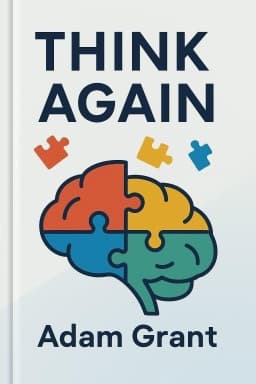
Unlock Your Brain’s Hidden Superpower: The Shocking Truth About Rethinking!
Discover why changing your mind is the smartest move you’ll ever make—and how to do it effectively.

Imagine standing at the edge of a wildfire, where your survival depends not just on physical strength but on your ability to rethink the situation faster than the flames spread. This vivid metaphor from Adam Grant’s 'Think Again' encapsulates the essence of mental flexibility—the power to question your own beliefs and update your views in light of new evidence. In today’s rapidly changing world, this ability is more crucial than ever.
Grant introduces us to four mental modes: the preacher, who defends sacred beliefs; the prosecutor, who attacks opposing views; the politician, who seeks approval; and the scientist, who embraces curiosity and doubt. The scientist mindset is the superpower that allows us to rethink effectively. It encourages us to test hypotheses, seek evidence, and remain open to changing our minds.
One surprising insight is the debunking of the 'first-instinct fallacy'—the idea that sticking to your initial answer is best. Research shows that students who change their answers often improve their scores, highlighting the value of reconsideration. This challenges our natural tendency to cling to initial beliefs and underlines the importance of intellectual humility.
Balancing confidence and humility is another critical aspect of rethinking. The Dunning-Kruger effect reveals how less competent individuals tend to overestimate their abilities, while experts may underestimate theirs. Interestingly, mild impostor syndrome can actually motivate people to work harder and learn more, showing that doubt isn’t always detrimental.
Embracing the joy of being wrong is a transformative mindset. Instead of fearing mistakes, we can see them as gifts that propel us toward wisdom. The 'inner dictator' in our minds often resists change to protect our ego, but silencing this voice opens the door to growth and innovation.
Constructive conflict, or task conflict, is a powerful tool for collective rethinking. When disagreements focus on ideas rather than personalities, they spark creativity and better decisions. Framing disputes as debates rather than fights encourages openness and reduces hostility, turning foes into partners in discovery.
Opening other people’s minds requires empathy, curiosity, and strategic persuasion. Presenting fewer, stronger reasons and asking curious questions fosters collaboration and reduces defensiveness. Starting with common ground builds trust and softens resistance.
Beyond individual rethinking, building communities that embrace lifelong learning is essential. Psychological safety—where members feel safe to speak up without fear—is the foundation for innovation. Educational approaches that encourage myth-busting and multiple drafts cultivate mental flexibility from a young age. Organizations that focus on decision-making processes rather than just outcomes foster cultures of continuous improvement.
Finally, escaping tunnel vision in life and career planning means embracing flexibility and regular reflection. Rigid long-term plans limit adaptability, while scheduled life checkups help align goals with evolving values. Focusing on meaning and contribution rather than status leads to greater satisfaction and resilience.
In sum, 'rethinking' is a lifelong practice that empowers you to thrive amid uncertainty. By cultivating mental flexibility, confident humility, joy in being wrong, constructive conflict, empathetic persuasion, learning communities, and flexible planning, you unlock your brain’s hidden superpower and prepare for a future of growth and fulfillment.
Start your journey today—think again, and think better.
Sources: 1 , 2 , 3 , 4
Want to explore more insights from this book?
Read the full book summary