
Unlock Your Inner Genius: How Thinking Like a Freak Can Change Your Life Forever!
Discover the unconventional mindset that transforms everyday problems into extraordinary opportunities.

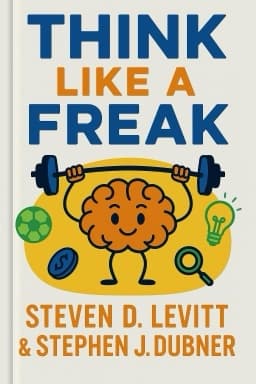
Imagine a world where the toughest problems you face suddenly become manageable puzzles waiting to be solved. This is the promise of Thinking Like a Freak, a groundbreaking book by Steven D. Levitt and Stephen J. Dubner, authors of the famous Freakonomics series. Far from being just an entertaining read, this book offers a blueprint for reprogramming your mind to approach challenges with fresh eyes and fearless curiosity.
At the heart of the freak mindset lies the courage to say, "I don't know." This simple admission, often avoided due to fear of looking ignorant, is actually the gateway to true learning and innovation. From children guessing answers to experts overestimating their knowledge, the human tendency to bluff can cloud judgment and hinder progress. But by embracing uncertainty and seeking feedback through experimentation, we open ourselves to genuine discovery.
Another cornerstone of freak thinking is the art of redefining problems. A famous example involves a competitive eater who shattered records not by eating faster but by asking how to make hot dogs easier to consume—breaking buns, dunking them in water, and pacing himself strategically. This shift in perspective reveals that sometimes the key to breakthrough solutions is simply asking the right questions.
Digging deeper, the book reveals that many social issues like poverty and crime are symptoms of deeper root causes such as institutional failures and historical legacies. For instance, the surprising link between abortion legalization and crime reduction decades later challenges conventional wisdom and underscores the importance of looking beneath the surface.
Understanding incentives is another powerful tool. People respond predictably to rewards and penalties, but poorly designed incentives can backfire, as seen in cases where paying for blood donations reduced supply or car rationing increased pollution. The freak mindset teaches us to design incentives thoughtfully, combining financial, moral, and social motivators to align behavior with desired outcomes.
Thinking like a freak also means embracing childlike curiosity and simplicity. Children ask relentless questions without fear of judgment, enabling fresh perspectives and creative problem-solving. Enjoyment and fun fuel mastery, turning challenges into joyful exploration.
Persuasion is subtle and complex. Facts alone rarely change minds because ideology and identity play powerful roles. Instead, empathy, humility, and storytelling engage emotions and foster understanding, helping us reach those resistant to change.
Finally, knowing when to quit is a vital skill. The sunk-cost fallacy traps many in unproductive endeavors, but strategic quitting frees resources for more promising pursuits. Sometimes flipping a coin can help break emotional ties and clarify true preferences.
By practicing these principles daily, you cultivate a mindset that balances creativity, rationality, and productivity. This ongoing journey transforms how you think, decide, and act, empowering you to navigate complexity with confidence.
In conclusion, thinking like a freak is not about eccentricity for its own sake but about harnessing unconventional wisdom to solve real problems. It invites you to be humble yet bold, curious yet disciplined, playful yet serious. Embrace this mindset, and watch your world transform.
Ready to unlock your inner genius? Start thinking like a freak today!
Sources: Four Minute Books, Mind The Risk, Blue Sky Traveler, Summaries.com 1 2 3 4
Want to explore more insights from this book?
Read the full book summary