
Mastering Complexity: How to Thrive in an Unpredictable World
Learn to Navigate and Influence Complex Systems for Better Outcomes

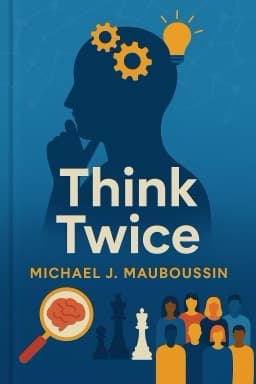
Modern life is shaped by complex systems—interconnected networks of agents whose interactions produce surprising and emergent behaviors. Michael Mauboussin’s Think Twice illuminates how these systems challenge traditional decision making.
Take the case of the Millennium Bridge in London, which began to wobble unexpectedly due to pedestrians synchronizing their footsteps. This positive feedback loop caused a phase transition, a sudden large-scale shift triggered by small perturbations. Similarly, bee colonies collectively choose hive sites without a leader, demonstrating decentralized self-organization and emergence.
Complex systems resist prediction and control through linear cause-effect reasoning. Instead, they require humility, continuous monitoring, and adaptive strategies. Leaders must embrace uncertainty, anticipate tipping points, and design feedback mechanisms to guide system behavior.
Understanding complexity transforms challenges into opportunities. By appreciating how small actions ripple through networks and how emergent properties arise, we can craft resilient organizations and make wiser strategic choices.
Think Twice encourages us to move beyond simplistic models and embrace the rich, dynamic nature of the systems we inhabit.
In doing so, we not only survive complexity but thrive within it.
1 , 2
Want to explore more insights from this book?
Read the full book summary