
Unlock Your Mind’s Secret Powers: The Shocking Truth Behind Fast and Slow Thinking!
Discover the hidden forces shaping your every decision and how to master them for a better life.

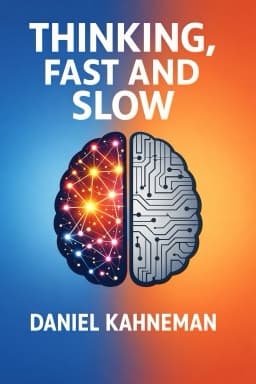
Have you ever wondered why you sometimes make snap judgments that turn out wrong, or why deliberate thinking feels so exhausting? Daniel Kahneman’s Thinking, Fast and Slow uncovers the fascinating dual-process model of the mind that explains these mysteries. Our brain operates with two systems: System 1, the fast, automatic, and intuitive thinker, and System 2, the slow, effortful, and analytical processor.
System 1 runs continuously, effortlessly generating impressions and intuitions that guide most of our behavior. It recognizes faces, detects danger, and reads emotions in a flash. In contrast, System 2 kicks in when we face complex problems, requiring concentration and mental energy — think of solving a tough math problem or making a reasoned decision.
But here’s the catch: System 2 is a 'lazy controller.' It dislikes effort and often defers to System 1’s quick answers, even when they’re wrong. This tendency explains many common judgment errors and biases, such as overconfidence, anchoring, and availability heuristics.
Moreover, our mind is an associative machine, automatically linking ideas, emotions, and memories into coherent stories. This automatic linking can lead to illusions of causality and priming effects, where subtle cues unconsciously influence our behavior — like walking slower after reading words related to old age.
Fascinatingly, cognitive ease or strain plays a huge role in shaping our beliefs and moods. Repeated exposure to statements increases their perceived truthfulness due to the comfort of familiarity, while good mood fosters creativity and trust, and bad mood promotes vigilance and careful thinking.
Finally, when faced with difficult questions, our mind often substitutes them with easier ones without us noticing — a mental shortcut that can lead to biased decisions influenced by our feelings rather than facts.
Understanding these processes empowers you to recognize when your intuition serves you well and when to engage your analytical mind to avoid pitfalls. Dive into the science of your own thinking and unlock smarter, more mindful decision-making.
For a deeper dive into these concepts, explore the full text of Thinking, Fast and Slow and related research. Your brain is more fascinating — and fallible — than you ever imagined.
Sources: Key insights synthesized from Medium, Rufbuk, Wizelit, and Coaching.com.sg. 1 2 3 4
Want to explore more insights from this book?
Read the full book summary