
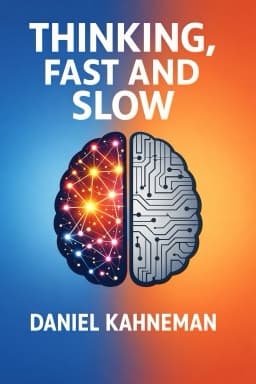
Why Your Brain Tricks You: The Hidden Biases from Kahneman’s Thinking, Fast and Slow
Unmask the mental shortcuts that lead to costly mistakes and learn how to outsmart your own mind.

Our brains are wired to make quick decisions to survive and thrive, but this speed comes at a cost. Daniel Kahneman’s Thinking, Fast and Slow reveals how System 1’s mental shortcuts, or heuristics, often lead to persistent cognitive biases that distort our judgment.
Anchoring Bias: When making estimates, we rely heavily on the first piece of information encountered — the anchor — even if it’s irrelevant. For example, initial price offers influence negotiations far more than rational calculations.
Availability Heuristic: We judge the likelihood of events based on how easily examples come to mind. Dramatic news stories about plane crashes make flying feel more dangerous than it statistically is.
Confirmation Bias: We favor information that confirms our existing beliefs and discount contradictory evidence, reinforcing misconceptions and polarization.
These biases arise because System 2, the analytical mind, often defers to System 1’s effortless answers to conserve mental energy. This 'lazy controller' effect means we rarely challenge our gut reactions unless motivated and able to do so.
Recognizing the presence of these biases is the first step to overcoming them. Techniques such as slowing down decision-making, seeking diverse perspectives, and questioning intuitive answers can help engage System 2 more effectively.
By unmasking these hidden mental traps, you can make smarter decisions, avoid costly errors, and improve critical thinking skills in all areas of life.
Sources: Insights adapted from Medium, Rufbuk, and Wizelit. 1 2 3
Want to explore more insights from this book?
Read the full book summary