
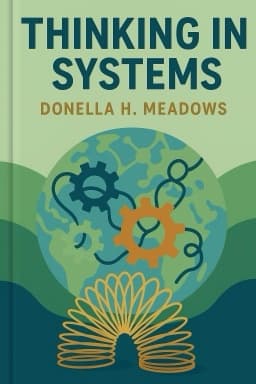
The Hidden Powers of Feedback Loops: Why Your Actions Ripple Farther Than You Think
Explore the fascinating world of feedback and how it shapes everything from your personal habits to global economies.

Understanding Feedback: The System’s Pulse
At the core of every system lies feedback — the process where outputs of a system loop back as inputs, influencing future behavior. Feedback loops can be balancing or reinforcing.
Balancing feedback loops work like a thermostat, opposing change to maintain stability. For example, when your body temperature rises, mechanisms activate to cool you down. These loops help systems achieve goals and maintain equilibrium.
Reinforcing feedback loops amplify change, creating snowball effects. Compound interest is a classic example, where money grows exponentially over time. Similarly, viral videos spread rapidly as more people share them, demonstrating reinforcing feedback in social systems.
The Role of Delays: The Hidden Cause of Oscillations
Delays in feedback, whether due to information transmission or physical processes, often cause systems to overcorrect or undercorrect. This leads to oscillations — cycles of boom and bust, like swings in inventory levels or economic cycles.
Consider a thermostat with a slow sensor: the room may become too hot before cooling activates, causing temperature swings. Similarly, delays in policy effects can make governance challenging.
Why Feedback Loops Matter for Leaders
Leaders who understand feedback dynamics can anticipate system responses and design better interventions. Ignoring feedback can lead to unintended consequences, policy resistance, or escalation.
For instance, attempts to reduce traffic congestion by building more roads often lead to more cars — a reinforcing feedback loop known as induced demand.
Harnessing Feedback for Change
By identifying and modifying feedback loops, you can steer systems toward desired outcomes. Strengthening balancing loops can stabilize systems, while carefully managing reinforcing loops can accelerate growth or innovation.
Ultimately, feedback loops remind us that systems are dynamic and interconnected. Small actions can ripple through the system, producing far-reaching effects.
Want to explore more insights from this book?
Read the full book summary