
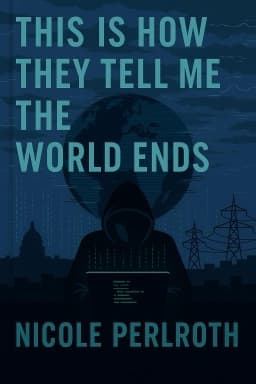
How a Single Bug Can Take Down the World: The True Stories Behind Zero-Day Attacks
Real-World Cyberattacks That Changed the Course of History

Real-World Cyberattacks That Changed the Course of History
In the digital age, the most devastating attacks can begin with a single, hidden flaw. Nicole Perlroth’s book brings to life the stories of cyberweapons that leapt from theory to reality, wreaking havoc on a global scale. Consider Stuxnet, a worm so sophisticated it was able to physically destroy nuclear centrifuges in Iran, setting back an entire nation’s ambitions and rewriting the rules of warfare. Or NotPetya, a piece of malware that started as a targeted attack but quickly spiraled out of control, paralyzing businesses, hospitals, and shipping companies on every continent.
These attacks are not just historical footnotes—they are warnings. The interconnectedness of our world means that a bug in one place can cause blackouts, financial losses, and chaos far beyond its intended target. Perlroth’s reporting is filled with examples of unintended consequences: ransomware locking doctors out of patient records, ports grinding to a halt, and ordinary families losing access to their bank accounts.
What makes these incidents so frightening is not just their scale, but their unpredictability. Cyberweapons do not stay contained; they mutate, spread, and sometimes return to haunt their creators. The story of NotPetya, for example, is a lesson in collateral damage: what began as an attack on Ukraine became the most costly cyberattack in history, with losses exceeding $10 billion.
The lesson is clear: no one is immune, and the next attack could come from anywhere. Perlroth’s book urges readers to recognize the fragility of our digital infrastructure and to demand greater investment in defense, resilience, and transparency. The stories she tells are chilling, but they are also a call to action—for governments, companies, and individuals alike.
Understanding these attacks is the first step in preventing the next disaster. By learning from the past, we can build a safer future—one where a single bug does not have the power to take down the world. 1 3
Want to explore more insights from this book?
Read the full book summary