
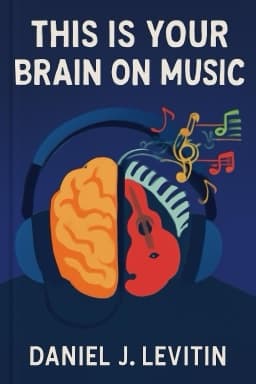
Unlocking the Brain's Musical Magic: How Music Transforms Your Mind and Emotions
Discover the science behind how music reshapes your brain, evokes powerful emotions, and enhances cognitive function.

Music is not just a form of entertainment; it is a profound stimulus that engages the brain in ways few other experiences can. From the moment a note sounds, your brain lights up in a complex dance of neural activity that spans auditory, motor, emotional, and cognitive regions. This interconnectedness is what makes music so powerful, capable of not only moving us emotionally but also reshaping our brain's structure and function.
Research shows that listening to music triggers dopamine release in the brain's reward centers, such as the nucleus accumbens, creating feelings of pleasure similar to other rewarding activities like eating or social bonding. This neurochemical response explains why music can evoke chills, joy, or even tears of nostalgia.
Moreover, musical training enhances brain plasticity, strengthening connections between auditory and motor regions. Expert musicians display structural brain changes that support superior auditory discrimination and motor coordination. This plasticity is a testament to the brain's adaptability, showing how consistent practice can rewire neural circuits to achieve extraordinary skills.
Music's ability to evoke vivid autobiographical memories further highlights its deep emotional resonance. Certain songs become emotional anchors, linking us to specific moments, people, or feelings through associative learning.
From an evolutionary perspective, music likely evolved as a social bonding mechanism and a tool for communication long before structured language emerged. It also may have served as a sexual selection signal, showcasing creativity and fitness.
In sum, music is a whole-brain experience that enriches cognition, emotion, and social connection. Understanding this neural symphony invites us to appreciate music not just as art but as a vital part of human nature and well-being.
For further reading on the neuroscience of music and its emotional impact, see recent studies highlighting music's role in learning, memory, and brain plasticity [[0]](#__0), [[1]](#__1), [[2]](#__2).
Want to explore more insights from this book?
Read the full book summary