
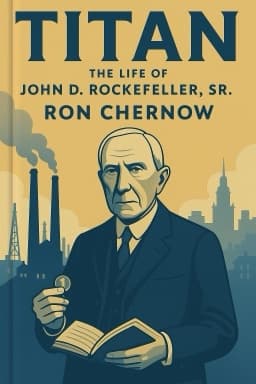
How John D. Rockefeller’s Ruthless Tactics Built the World’s First Billionaire—and Changed America Forever
The Untold Secrets Behind Rockefeller’s Rise and the Empire That Shaped Modern Capitalism

When John D. Rockefeller entered the world in 1839, few could have predicted that this quiet, disciplined boy from rural New York would one day become the most powerful businessman in American history. Rockefeller’s rise is not just a tale of personal ambition, but a blueprint for the making of modern capitalism—a story marked by relentless discipline, strategic cunning, and controversy that echoes to this day.
The roots of Rockefeller’s empire began in hardship. Raised by a devout mother and a cunning, often-absent father, young John learned the value of thrift and the necessity of self-reliance. He meticulously recorded every penny earned or spent in a red ledger, a habit that would foreshadow his obsession with order and accountability. As America surged into the industrial age, Rockefeller saw opportunity where others saw chaos. The oil boom of the 1860s was a wild frontier, with fortunes made and lost overnight. But Rockefeller’s genius was not in wild speculation—it was in methodical consolidation.
In Cleveland, Rockefeller founded Standard Oil with a clear vision: efficiency at all costs. He negotiated secret rebates with railroads, undercutting competitors and controlling transportation costs. These deals, hidden from public view, allowed Standard Oil to slash prices and drive rivals out of business. Rockefeller’s approach was systematic: he bought out competitors, integrated every stage of production, and imposed rigorous standards on every detail, from refining to distribution. The result was not just a company, but an empire—one that supplied over 90% of America’s oil by the 1880s.
But such dominance came at a price. Competitors accused Standard Oil of predatory practices, and journalists like Ida Tarbell exposed the company’s secret dealings. Public outrage grew, culminating in the landmark Supreme Court decision of 1911, which ordered the breakup of Standard Oil into 34 separate companies. Yet, this ‘defeat’ only multiplied Rockefeller’s wealth, as he retained shares in each new entity. The legacy of Standard Oil endures in the giants it spawned—Exxon, Chevron, and others.
Rockefeller’s story is more than a business case study; it is the origin of debates about monopoly power, corporate ethics, and the responsibilities of wealth. His tactics—innovative, aggressive, and often ruthless—set the template for generations of entrepreneurs. Today, as we grapple with the power of tech giants and global corporations, the lessons of Rockefeller’s ascent—and the backlash it provoked—remain as relevant as ever.
For those who seek to understand the DNA of American capitalism, the story of John D. Rockefeller is indispensable. His legacy is not just in oil or money, but in the very rules that govern competition, innovation, and the pursuit of greatness.
2
3
Want to explore more insights from this book?
Read the full book summary