
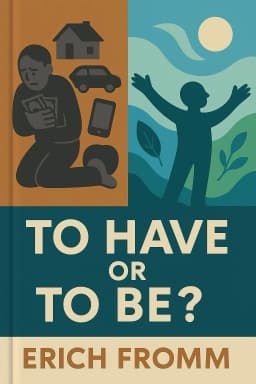
How Consumer Culture Hijacked Happiness—And What You Can Do About It
A deep dive into the psychological and social traps of materialism, and how to reclaim joy.

Why do so many people feel empty, anxious, and disconnected in an age of unprecedented abundance? Erich Fromm’s ‘To Have or To Be?’ provides a compelling answer: we have been seduced by a culture that equates happiness with consumption. From the earliest age, we are taught to measure success by what we own, not by who we are. Advertising and social media bombard us with images of the ‘good life’—luxury cars, designer clothes, perfect homes—creating a cycle of desire and disappointment. The result? A society obsessed with having, but starved for meaning.
Fromm’s critique is more relevant than ever. Studies show that increased material wealth does not lead to greater happiness once basic needs are met. In fact, the relentless pursuit of more often leads to anxiety, depression, and social isolation. The ‘having’ mode turns even relationships into commodities, and love into something to acquire or consume. The ecological cost is staggering: our planet is being depleted in the name of endless growth.
But there is a way out. Fromm calls for a radical shift from having to being. This means valuing experiences over possessions, relationships over status, and creativity over consumption. It means building communities that support sharing, cooperation, and sustainability. Around the world, people are rediscovering the joy of simplicity—growing food, making art, volunteering, and supporting one another. These acts may seem small, but they are seeds of a new culture.
Reclaiming happiness from consumer culture starts with awareness. Notice when you’re tempted to buy your way to joy. Ask yourself: What do I really need? What brings me alive? By choosing being over having, you not only transform your own life—you help create a future where everyone can thrive. Ready to reclaim your joy?
Want to explore more insights from this book?
Read the full book summary