
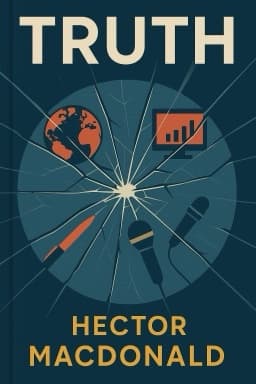
Unmasking Truth: How Our Perceptions Shape Reality and Why It Matters More Than Ever
Discover the hidden layers of truth and how understanding them can transform your worldview and communication skills.

Truth is often portrayed as a singular, objective reality—an unchanging beacon in a sea of uncertainty. Yet, as we peel back the layers, we find that truth is far more complex, multifaceted, and deeply intertwined with our perceptions, values, and contexts. This blog explores how truth is constructed, communicated, and contested in our modern world, offering new perspectives to empower your understanding and dialogue.
The Many Faces of Truth: Embracing Complexity
At its core, truth is rarely whole. Reality is too complex to be fully captured in a single statement or viewpoint. Our minds naturally simplify this complexity by focusing on selected facets, inevitably leaving out important details. For example, hearing 'there is an egg on the table' may conjure vastly different images depending on cultural or personal context—chicken egg, duck egg, or even a chocolate egg. This partial nature of truth means that what we accept as true is often a fragment shaped by our environment and knowledge.
Subjective Truths: The Power of Values and Desires
Moving beyond facts, we encounter subjective truths shaped by morality, desirability, and financial value. Moral codes vary widely across cultures and evolve over time, reflecting group identities and social cohesion. Similarly, what we desire or value is heavily influenced by cultural trends, social proof, and branding narratives. A luxury handbag, for instance, represents not just utility but status and aspiration, demonstrating how social constructs imbue objects with meaning beyond their physical properties.
Language as Architect: Artificial Truths and Social Constructs
Language does more than describe reality; it creates it. Definitions and names forge artificial truths—shared realities sustained by collective belief. Money, nations, and human rights exist because we agree they do. Changing definitions can shift entire debates, influencing laws and social acceptance. Recognizing this empowers us to critically evaluate the realities presented and use language responsibly.
Navigating the Unknown: Predictions and Beliefs
Uncertain predictions and deeply held beliefs, though not empirically verifiable, shape decisions and identities profoundly. Forecasts guide business and policy, sometimes becoming self-fulfilling. Beliefs form communities and worldviews, fostering solidarity or conflict. Embracing humility and openness toward these unknown truths enhances our capacity for respectful dialogue and informed decision-making.
Ethical Communication: The Responsibility of Truth-Telling
Communicating truth ethically involves balancing clarity, completeness, and constructive intent. Omitting relevant facts or framing information manipulatively can mislead even without lying. Ethical communicators ask, 'If my audience knew all I know, would they feel fairly represented?' This approach builds trust, fosters understanding, and promotes positive outcomes.
Competing Truths and Power Dynamics in Society
In public discourse, multiple truths often compete, influenced by political, media, and cultural forces. Those with power shape which narratives dominate, affecting collective memory and identity. Recognizing these dynamics encourages critical thinking, empathy, and dialogue across divides, essential for navigating our complex social landscape.
Harnessing Truth for Transformation
The truths we choose to embrace and share have transformative potential. Ethical selection and communication of truth empower individuals and communities to foster trust, inspire change, and build a more informed and connected world. Our conscious engagement with truth is a powerful tool for personal growth and societal progress.
Understanding and embracing the complexity of truth equips us to navigate competing narratives thoughtfully and ethically. As we do, we contribute to a world where truth enlightens rather than divides, empowers rather than manipulates.
Explore these ideas further and join the conversation about the evolving nature of truth in our society.
Sources: Princeton University Press on truth in politics 1 , How Communication Works blog on effective communication 2 , Lifehack communication books 4
Want to explore more insights from this book?
Read the full book summary