
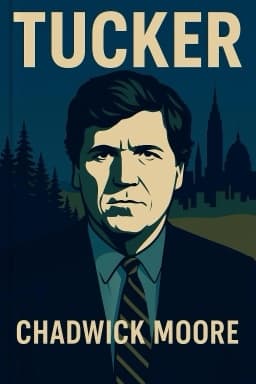
Why Tucker Carlson’s Story Matters: A Deep Dive into Media, Politics, and Culture
Analyzing the intersection of media power, political ideology, and cultural identity through the lens of Tucker Carlson’s life and work.

Tucker Carlson is more than a television personality; he is a cultural phenomenon whose story reflects the shifting tides of American media and politics. Raised amid contrasting family backgrounds and personal challenges, he emerged as a journalist who defies easy categorization.
His transition from print journalism to television and digital media exemplifies adaptability in a rapidly changing landscape. Co-founding a conservative digital news outlet, he harnessed the power of new platforms to reach audiences disillusioned with mainstream narratives.
At the heart of his commentary lies a profound commitment to family values and a critique of modern secularism.
His personal life, marked by sobriety and a stable marriage, offers a counterpoint to the often turbulent world of political media. His experiences with harassment and threats reveal the high stakes of speaking out in a polarized environment.
International experiences, such as witnessing the complexities of the Contra War, inform his nuanced political views that reject simplistic binaries. Admiring leaders who prioritize pragmatism over ideology, he embodies a skepticism of all power centers.
The media landscape itself has felt his impact profoundly. His departure from a major network caused significant financial repercussions, while his independent ventures have demonstrated the power of direct audience engagement.
Finally, his reflections on masculinity and tradition call for a cultural renaissance grounded in responsibility and honor. These themes speak to wider societal anxieties and hopes for the future.
In understanding Tucker Carlson, we gain insight into the broader cultural and political currents shaping America today. His story is a lens through which we can explore questions of identity, power, and truth.
Sources: Amazon, Goodreads, Barnes & Noble, media critiques 1 , 2 , 3
Want to explore more insights from this book?
Read the full book summary