
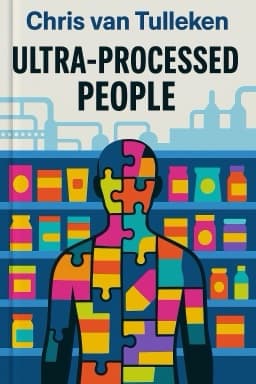
The Secret War on Your Taste Buds: How Food Companies Engineer Cravings
Behind the Scenes of the Multi-Billion Dollar Flavor Industry

Ever wondered why you can’t stop at just one chip? Or why a certain breakfast cereal makes you crave a second bowl, even when you’re full? Chris van Tulleken’s Ultra-Processed People pulls back the curtain on the flavor industry—a world where scientists and marketers work together to create foods that hijack your senses and keep you coming back for more.
Inside the labs of major food corporations, teams of chemists and psychologists analyze every aspect of eating: crunch, melt, aroma, even the sound a snack makes when you bite it. The goal? Maximum reward for minimum effort. By combining sugar, salt, and fat in precise ratios, they create what’s known as the 'bliss point.' Add in artificial flavors, colorings, and emulsifiers, and you have a food that lights up your brain’s pleasure centers like a slot machine. It’s not an accident—it’s the result of millions spent on research and development.
But the manipulation doesn’t stop at taste. Packaging is designed to catch your eye from across the aisle. Bright colors, cartoon mascots, and health claims like 'low fat' or 'vitamin-enriched' create a 'health halo' that makes you feel better about your purchase. Supermarkets are laid out so that UPFs are always within reach—at eye level, near the checkout, or in special displays. Advertisements target children during their favorite shows, making sugary cereals and snacks part of childhood memories.
Van Tulleken reveals that these strategies are not just about selling food—they’re about creating lifelong customers. The industry’s own documents admit that the most profitable products are those that people eat compulsively. It’s a business model built on addiction, not nutrition. Understanding these tactics is the first step to reclaiming your agency in a food environment designed for profit, not health.
Next time you shop, pause and notice: Who chose what goes on these shelves? Who benefits when you can’t stop eating? With knowledge comes power—and the ability to make choices that truly nourish you.
Want to explore more insights from this book?
Read the full book summary