
What Happens to Your Body When You Eat Ultra-Processed Food Every Day? (You’ll Be Shocked!)
The Unseen Chemical Experiment Inside Your Kitchen

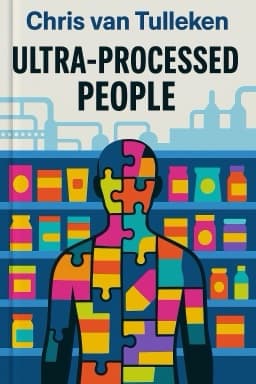
Imagine waking up and reaching for a breakfast cereal that claims to be “whole grain” and “fortified with vitamins.” You pour on some milk, maybe add a splash of juice from a brightly colored carton. By lunchtime, you grab a sandwich with soft, long-lasting bread and a bag of crisps. Dinner is a ready meal, heated in minutes. It all seems normal—until you realize that nearly everything you ate today was created in a factory, not a field. Chris van Tulleken’s Ultra-Processed People reveals that this is not just a modern convenience—it’s a radical experiment on the human body.
UPFs are everywhere, making up more than 60% of the average UK and US diet. They’re not just “junk food”—they’re foods so altered by industry that your body barely recognizes them. Van Tulleken describes how these foods are engineered to override your natural signals of hunger and fullness. The combination of sugar, salt, and fat—along with emulsifiers and artificial flavors—creates what scientists call 'hyperpalatability.' Your brain responds with dopamine, the chemical of pleasure and reward, but your gut is left confused. The result: you eat more, feel less satisfied, and crave even more UPF.
But the story goes deeper. Your gut is home to trillions of microbes, forming a 'second brain' that communicates with your real brain through the gut-brain axis. Real food—rich in fiber and complexity—nourishes this ecosystem. UPF, stripped of fiber and loaded with additives, starves good bacteria and encourages the growth of species linked to inflammation and disease. Van Tulleken’s own experiment—eating 80% UPF for a month—left him hungrier, moodier, and with measurable changes in his microbiome and blood markers.
Recent studies show that UPF consumption is linked to obesity, type 2 diabetes, heart disease, and even depression and dementia—regardless of whether you gain weight. The risks rise with every extra portion of UPF, and the changes to your gut and brain can happen in just days. The food industry, meanwhile, spends billions designing foods to be irresistible and marketing them as healthy, natural, or essential for busy lives.
So what can you do? Awareness is the first step. Read ingredient labels—if you see words you wouldn’t use at home, it’s likely UPF. Listen to your body after eating: Are you truly satisfied, or do you want more? Small shifts—like swapping packaged snacks for real fruit, or cooking a simple meal from scratch—can help restore your natural appetite signals and support your gut health. The revolution starts in your kitchen, one meal at a time.
Ready to take back control? Keep reading for more insights from the book and practical tips to escape the UPF trap.
Want to explore more insights from this book?
Read the full book summary