
How Close Did America Come to Fascism? The Untold Story of Nazi Influence on U.S. Soil
Exploring the chilling reality of fascist sympathies, propaganda, and covert operations in America before WWII.

When we think of fascism and Nazi Germany, our minds often leap to Europe, to the battlefields and cities torn by war. But what if the seeds of fascism were planted much closer to home, right here in the United States? This is not a tale of distant tyranny; it is a story of how fascist ideology, propaganda, and covert operations infiltrated American soil in the 1930s and 1940s, threatening the very foundations of democracy.
One cannot begin this exploration without meeting George Sylvester Viereck, a German immigrant whose literary talents hid a darker purpose. Viereck was a master propagandist, funded by the German government to spread Nazi ideology through magazines and writings. His early work, including the first known gay vampire novel, masked his political ambitions but also revealed his flair for dramatic storytelling that he later weaponized for propaganda. Alongside him was Philip Johnson, a Harvard graduate and architect who admired Hitler’s rallies and sought to bring fascism to America by founding the Gray Shirts, a paramilitary group modeled after the Nazi Brownshirts.
The 1930s saw the rise of fascist groups like the Silver Shirts, who amassed thousands of members and prepared for violent confrontation. Father Charles Coughlin, a Catholic priest with a booming national radio voice, spread antisemitic and fascist messages to tens of millions, mobilizing mass rallies and forming the Union Party. These movements combined paramilitary readiness with mass media influence, creating a potent threat to American democracy.
Perhaps most chilling is the revelation that Nazi racial laws were inspired by American segregationist Jim Crow laws. Heinrich Krieger, a Nazi lawyer, studied American race laws at the University of Arkansas, using them as a blueprint for the Nuremberg Laws that institutionalized racial discrimination in Germany. The U.S. Supreme Court’s rulings denying constitutional rights to residents of territories based on race further illustrated how legal systems could be twisted to uphold racial hierarchies.
Authoritarian figures like Huey Long demonstrated how populism and intimidation could consolidate power within America itself. Long’s simultaneous governorship and Senate seat allowed him to control Louisiana with armed guards and political violence, all while promoting radical economic reforms. His political theater mirrored the fascist spectacles abroad, showing how authoritarianism could cloak itself in the language of democracy.
Intellectual architects like Lawrence Dennis connected American and European fascism, mingling with Hitler and Mussolini and influencing political thought. His diplomatic background and controversial ideas highlighted the complex exchanges shaping fascist ideology globally.
Beyond ideology and politics, Nazi Germany waged a covert war on American soil through espionage and sabotage. The German embassy held millions in cash to fund propaganda, flooding America with leaflets, pamphlets, and radio broadcasts designed to sow discord and isolationism. Secret plans to acquire munitions factories and raid armories underscored the seriousness of the threat.
Yet, in this dark landscape, brave individuals emerged. Jewish veteran Leon Lewis ran undercover spy networks infiltrating fascist groups, while prosecutors like William Power Maloney led sedition trials exposing conspiracies. Journalists risked their safety to reveal plots and inform the public. Their courage helped preserve democracy.
The cultural front was no less important. Nazi-funded shortwave radio stations spread propaganda, but Hollywood studios produced anti-Nazi films, and artists and journalists used their platforms to resist fascist narratives. This battle for hearts and minds was crucial in maintaining public awareness and moral clarity.
Reflecting on this history, we see that democracy's survival depended on vigilance, courage, and the unyielding defense of freedoms. The lessons of this era remind us that authoritarian threats can arise anywhere and that protecting democracy is an ongoing responsibility.
This story, richly detailed and compellingly told, uncovers a hidden chapter of American history with profound implications for today. It challenges us to remember the sacrifices of those who fought fascism at home and to remain ever watchful against the shadows that threaten liberty.
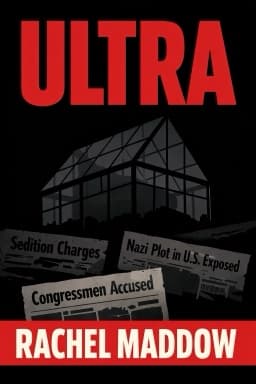
For those eager to understand this remarkable history, the book
Want to explore more insights from this book?
Read the full book summary