
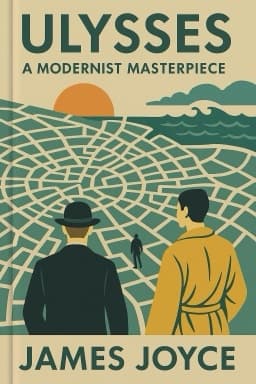
Unlocking the Secrets of Ulysses: How Joyce’s Masterpiece Changed the Way We Read Forever
Explore the revolutionary storytelling methods that make Ulysses a cornerstone of modern literature.

Explore the revolutionary storytelling methods that make Ulysses a cornerstone of modern literature.
Few novels have revolutionized narrative technique as profoundly as James Joyce’s Ulysses. At its core lies the stream of consciousness method, a literary innovation that plunges readers directly into the swirling, fragmented minds of its characters. Unlike traditional third-person narration, this approach captures the raw, unfiltered flow of thoughts, memories, and sensory impressions.
Interior Monologues: The Mind Laid Bare
Joyce’s use of interior monologue extends beyond mere thoughts to include sensory experiences and non-verbal reflections. This creates a rich tapestry of consciousness that reveals the characters’ deepest fears, desires, and contradictions. For example, Leopold Bloom’s reflections on mundane details like the smell of cooking or the sensation of a bruise become portals into his complex psyche.
Stylistic Pastiches and Parody
One of the novel’s most dazzling chapters parodies the evolution of English prose, moving through styles from Anglo-Saxon simplicity to Victorian verbosity and modern minimalism. This playful experimentation not only showcases Joyce’s linguistic mastery but also critiques literary conventions and the limitations of language.
Active Reader Engagement
The narrative’s complexity demands active participation. Readers must piece together allusions, recognize mythic parallels, and navigate shifting perspectives. This transforms reading into an immersive and rewarding intellectual adventure.
Language as Play and Critique
Joyce’s wordplay, puns, and parodies reveal language’s fluidity and power. The novel mocks clichés and exposes the gap between words and meaning, emphasizing the challenges of communication.
In sum, Ulysses reshaped storytelling by daring to depict the human mind’s complexity and by inviting readers into a new, more interactive literary experience. Its innovations continue to influence writers and challenge readers to embrace the richness of language and consciousness.