
Why AI Isn’t Perfect—And Why That’s a Beautiful Thing
How Embracing AI’s Flaws Can Teach Us About Ourselves

Introduction
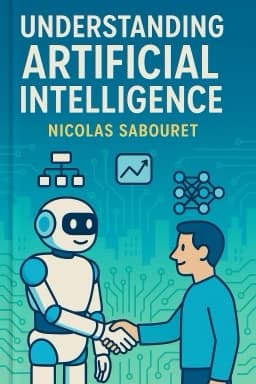
When you think of artificial intelligence, you might imagine flawless machines solving every problem with lightning speed. But the truth is, even the most advanced AI systems face limits—and that’s not a weakness, but a feature. This blog unpacks the surprising beauty of imperfection in AI, drawing on lessons from Nicolas Sabouret’s book and the latest breakthroughs in the field.
The Complexity Trap
Some problems are so vast that even the fastest supercomputers would take longer than the age of the universe to solve them exactly. That’s where heuristics—smart shortcuts—come in. These rules-of-thumb, inspired by human intuition, help AI find workable answers quickly, even if they aren’t perfect.
Learning from Nature: Metaheuristics
AI often borrows strategies from the natural world. Ant colony algorithms mimic the way real ants find food, while evolutionary algorithms breed and select the best solutions, just like nature favors the fittest. These metaheuristics show that collaboration and adaptation are more powerful than brute force.
The Power of ‘Good Enough’
In both AI and life, perfection is often impossible. By settling for solutions that are “good enough,” we can achieve remarkable results—whether it’s finding the fastest route through city traffic or designing a new product. This pragmatic approach teaches us resilience and adaptability, two qualities that are essential for both machines and humans.
Embracing Imperfection
Rather than fearing AI’s flaws, we should celebrate them. These limitations push us to be creative, to collaborate, and to keep learning. By working alongside imperfect machines, we discover our own strengths—and our shared humanity.
Conclusion
AI’s imperfections are not signs of failure, but invitations to grow. By embracing the beauty of approximation and the wisdom of collaboration, we can build a future where both humans and machines thrive—together.
Want to explore more insights from this book?
Read the full book summary