
Debunking the Myth of 'Giftedness': Why Talent Is More Than IQ
Explore why talent is multidimensional and how greatness emerges from more than just innate IQ.

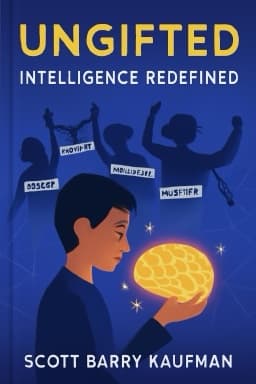
We’ve all heard the term 'gifted' tossed around as if it were a simple label for those born with high IQs. But is giftedness really just about intelligence? Scott Barry Kaufman’s Ungifted: Intelligence Redefined reveals that talent is far more complex, shaped by a mosaic of traits, effort, and opportunity.
Deliberate practice—focused, goal-oriented training—is essential for developing expertise. However, practice alone is not sufficient. Innate abilities like memory, creativity, and motivation interact with practice to produce greatness. Kaufman highlights that unlike IQ, which follows a normal distribution, greatness is heavily skewed with a few exceptional outliers, reflecting the multiplicative nature of factors involved.
Talent is multidimensional and domain-specific. For example, musical talent involves pitch sensitivity, memory, and emotional expression, while scientific talent requires analytical thinking, persistence, and creativity. Personality traits such as openness to experience and conscientiousness also influence how abilities develop and are expressed.
This understanding challenges narrow definitions of giftedness and calls for personalized approaches that recognize diverse strengths and developmental trajectories. It also underscores the importance of creating environments that provide opportunities and support tailored to individual profiles.
By redefining giftedness as a multifaceted, dynamic phenomenon, we move towards more equitable and effective ways to nurture talent in all its forms.
References: Blinkist summary 1 , Bookey summary 3 , Elevate Society review 4
Want to explore more insights from this book?
Read the full book summary