
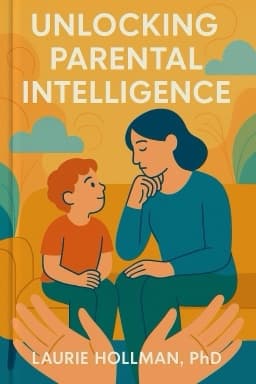
The Secret Language of Children: What Your Child’s Behavior Is Really Saying
Decode Tantrums, Silence, and Defiance With Parental Intelligence

Children rarely say exactly what they mean. A tantrum in the grocery store, a sullen silence after school, or a sudden burst of defiance at bedtime—these are not just random acts. They are messages, written in the language of behavior, waiting for a parent who knows how to listen.
Why Behavior Is Communication
Laurie Hollman’s work reveals that every action is a clue to a child’s inner world. Instead of seeing misbehavior as a problem to be fixed, Parental Intelligence teaches us to see it as a question: 'What does my child need right now?' By observing facial expressions, body language, and even the tone of voice, parents can begin to decode what words cannot express.
From Meltdowns to Meaning
Take the example of a child who refuses to eat dinner. Is it about the food, or is it a reaction to a stressful day? By gently asking and listening, parents can uncover hidden worries or unmet needs. This approach transforms power struggles into moments of empathy and connection.
The Science of Nonverbal Cues
Studies show that up to 70% of communication is nonverbal. Children, especially young ones, rely on gestures, expressions, and actions to express complex feelings. Parental Intelligence encourages parents to notice the small things: a clenched fist, averted eyes, or a sudden change in energy. These are the keys to understanding what your child is really saying.
Practical Tips for Everyday Life
- Pause before reacting. Look for the feeling behind the behavior.
- Validate your child’s emotions, even if you don’t agree with their actions.
- Use gentle questions to invite your child to share their thoughts.
- Remember that every child is unique—what works for one may not work for another.
Building Emotional Security
When children feel understood, they are less likely to act out and more likely to seek help when they’re struggling. Parental Intelligence isn’t about avoiding conflict—it’s about turning conflict into connection. With practice, you can become fluent in your child’s secret language, building a foundation of trust and emotional security that will last a lifetime.
Want to explore more insights from this book?
Read the full book summary