
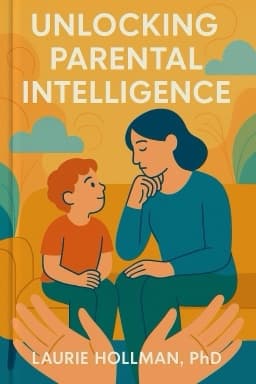
Unlocking Parental Intelligence: 5 Ways to Turn Chaos Into Connection With Your Kids
How a Revolutionary Parenting Approach Can Transform Everyday Family Life

Parenting isn’t easy. The daily grind of meals, school, chores, and bedtime can leave even the most patient parent feeling overwhelmed. But what if you could understand the hidden messages behind your child’s behavior? Laurie Hollman’s 'Unlocking Parental Intelligence' offers a blueprint for transforming family conflict into deep connection, and it starts with one radical idea: every behavior, even the most challenging, is meaningful.
What Is Parental Intelligence?
Parental Intelligence is a five-step process that helps parents decode their child’s actions, reflect on their own reactions, and collaboratively solve problems. Instead of asking, 'How do I stop this?' parents learn to wonder, 'What is my child trying to tell me?' This shift from control to curiosity is the heart of the method.
The Five Steps
- Stepping Back: Pause before reacting to observe what’s really happening.
- Self-Reflection: Recognize how your own experiences and emotions influence your responses.
- Understanding Your Child’s Mind: Tune into your child’s feelings, thoughts, and developmental stage.
- Developmental Awareness: Set expectations based on your child’s unique path, not just their age.
- Collaborative Problem-Solving: Work together to find solutions that honor everyone’s needs.
Real-Life Transformations
Consider the story of a mother whose son refused to go to school. Instead of punishing him, she used Parental Intelligence to uncover his anxiety about a new teacher. Together, they brainstormed ways to make mornings less stressful. The result? Less conflict, more trust, and a child who felt truly heard. These stories, based on real clinical experiences, show that every family can grow stronger—even in the face of struggle.
Why Empathy Beats Punishment
Research shows that children who feel understood are more likely to cooperate, develop resilience, and form healthy relationships. Parental Intelligence isn’t about being permissive—it’s about setting boundaries with empathy and teaching children to navigate their own emotions. When parents repair after conflict, they model resilience and teach kids that mistakes are part of learning.
Is Parental Intelligence Right for Every Family?
Absolutely. Whether your child is neurotypical or has special needs, the five steps can be adapted to fit your family’s unique challenges. The book includes examples of parents supporting children with ADHD, autism, and anxiety—always focusing on strengths, not just struggles.
Final Thoughts
Imagine a home where conflict is met with curiosity, where apologies are freely given, and where every setback is a chance to grow. That’s the promise of Parental Intelligence. With practice, patience, and a willingness to learn, you can unlock a more peaceful, connected family life—one meaningful moment at a time.
Want to explore more insights from this book?
Read the full book summary