
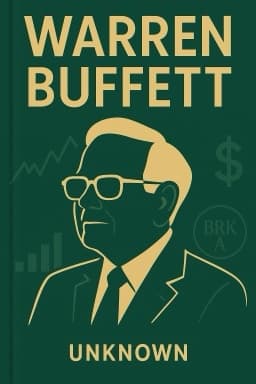
Unlocking Buffett’s Billion-Dollar Secrets: The Investment Playbook You Can’t Afford to Miss!
Discover the timeless investing principles and mindset that built one of the greatest financial empires in history.

Imagine stepping into the shoes of one of the most successful investors in history, a man whose name is synonymous with savvy, patience, and an uncanny ability to see value where others see chaos. Warren Buffett’s journey from a curious child selling gum and magazines to the helm of a financial empire is not just inspiring—it’s a masterclass in investing that anyone can learn from.
Buffett’s story begins with small ventures that taught him the power of patience and reinvestment. At just eleven years old, he bought stocks that initially lost value but later soared, showing early on that long-term vision beats short-term panic. His ventures into pinball machines and newspaper deliveries weren’t mere childhood hobbies but foundational lessons in entrepreneurship and financial acumen.
Moving beyond childhood, Buffett’s investment philosophy crystallizes around four core principles: investing in businesses with enduring prospects, buying undervalued companies, seeking high returns on capital, and valuing honest management. This approach, influenced by mentors like Benjamin Graham and Philip Fisher, combines rigorous quantitative analysis with a deep appreciation for the quality of leadership.
Central to Buffett’s success is his ability to transform struggling companies into engines of growth. The story of Berkshire Hathaway, once a failing textile firm turned investment giant, illustrates the power of strategic vision. By acquiring shares in stalwarts like Coca-Cola and Wells Fargo before their meteoric rise, Buffett demonstrated the rewards of patience and informed risk-taking. Understanding the differences between mutual funds and hedge funds further highlights his preference for stability and long-term growth over speculative gambles.
But investing is not without risks. Buffett’s deliberate structuring of stock classes—keeping Class A shares expensive and avoiding stock splits—ensures control remains with trusted investors, minimizing volatility and speculative ownership. Lessons from the 2007-2008 financial crisis remind us of the dangers of leverage and emotional panic selling.
Beyond numbers and charts, Buffett’s wisdom shines through in his motivational sayings. The fragility of reputation, the inevitability of mistakes, and the power of simplicity are recurring themes that inspire resilience and integrity. His famous advice to say 'no' to almost everything emphasizes focus and discipline, qualities essential for navigating the complex world of investing.
Market downturns, often feared by many, are seen by Buffett as opportunities. Buying undervalued stocks during recessions requires courage and calm, traits that distinguish successful investors from the crowd. By understanding market cycles and psychological pitfalls like panic selling, one can turn volatility into advantage.
Confidence and decisiveness are the final pillars of Buffett’s approach. Delaying tough decisions can lead to heavy losses, while rational, timely actions protect capital and seize gains. Accepting market unpredictability fosters flexible strategies and reduces fear-driven errors.
Ultimately, investing is a lifelong journey of learning, awareness, and adaptation. Keeping abreast of global economic trends and continuously expanding financial literacy empower investors to make informed choices and safeguard their futures.
By internalizing these lessons—patience, value, integrity, resilience, and continuous learning—you can embark on your own path to financial empowerment. The road may be long, but with wisdom as your guide, the journey is rich with possibility.
As the market continues to evolve, so too must your strategies. Embrace the timeless principles of Warren Buffett, not just as investment tactics but as a philosophy for life and growth.
Sources: Investopedia’s detailed analysis of Buffett’s strategy [[0]](#__0), comprehensive academic review of his investment approach [[1]](#__1), and insights into his personal philosophies from Harvard Business Review [[2]](#__2), alongside modern interpretations of his timeless wisdom [[3]](#__3).
Want to explore more insights from this book?
Read the full book summary