
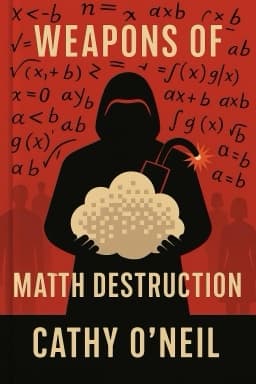
Are Algorithms Secretly Destroying Your Life? The Shocking Truth Behind ‘Weapons of Math Destruction’
How opaque mathematical models perpetuate inequality and what you can do about it.

Algorithms promise efficiency and fairness, but what if they are quietly perpetuating inequality and destroying lives? This is the provocative question at the core of Cathy O’Neil’s Weapons of Math Destruction. These models, though mathematical and seemingly objective, often operate in secrecy, making life-altering decisions without transparency or recourse.
Consider teacher evaluations based solely on student test scores. While intended to improve education quality, these models can unjustly fire dedicated teachers due to flawed metrics. In criminal justice, risk assessment algorithms used for sentencing incorporate proxies linked to race and poverty, leading to longer sentences for marginalized groups. Employment practices increasingly use credit scores and personality tests that exclude financially struggling individuals from job opportunities.
One of the most alarming features of these WMDs is their opacity. Protected as trade secrets, their inner workings remain hidden from public scrutiny. This secrecy prevents affected individuals from challenging unfair decisions and allows harmful practices to persist.
However, change is underway. Ethical data science is gaining traction, with calls for data scientists to swear a Hippocratic Oath to prevent harm. Transparency initiatives, algorithmic audits, and legal demands for explanation are pushing back against the black box nature of these models.
Public awareness and activism are vital. By understanding these hidden forces, citizens can demand accountability and push for regulations that ensure fairness and justice. Technology need not be a weapon of destruction but can instead be a tool for empowerment and equity.
In this blog, we reveal the shocking truths behind these hidden algorithms and explore how society can reclaim control over technology’s impact on our lives.
Sources: Scholarly Kitchen review, Amazon book overview, Columbia University critique, University of Washington insights 1 2 3 4
Want to explore more insights from this book?
Read the full book summary