
Unmasking the Hidden Dangers of Big Data: How ‘Weapons of Math Destruction’ Reveal Our Algorithmic Nightmare
A deep dive into how opaque algorithms silently shape our lives and perpetuate inequality.

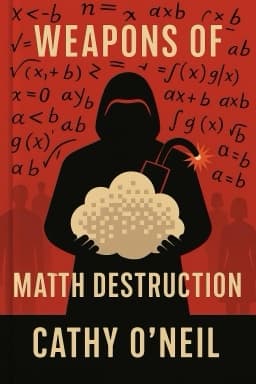
Imagine waking up in a world where invisible forces quietly decide your fate—whether you get a job, a loan, or even a fair trial—without your knowledge or chance to appeal. This is not a dystopian fiction but the reality explored in Weapons of Math Destruction, a revealing exposé by Cathy O’Neil. The book uncovers how large-scale, opaque algorithms—what O’Neil calls WMDs—are shaping our society in ways that often deepen inequality and injustice.
At the heart of this narrative is the concept that models—mathematical representations designed to predict or influence human behavior—are not neutral tools. They are simplified abstractions infused with the values and biases of their creators. For example, a model evaluating teacher performance might rely solely on test scores, ignoring critical factors like classroom engagement or socioeconomic challenges. This simplification can lead to unfair consequences, such as wrongful job loss.
Moreover, these models often rely on proxies—indirect indicators like zip codes or credit scores—that can inadvertently encode systemic prejudices. When a person’s neighborhood is used as a proxy for creditworthiness, it risks penalizing entire communities based on historic inequalities.
One chilling aspect of WMDs is their opacity. Companies guard their algorithms as trade secrets, creating black boxes that make it impossible for those affected to understand or challenge decisions. This secrecy fosters a dangerous power imbalance and erodes trust in institutions.
Even more alarming are the self-reinforcing feedback loops these models create. For example, a low credit score can lead to job rejection, which worsens financial hardship, further damaging credit scores in a vicious cycle. In criminal justice, risk assessment algorithms can lead to longer sentences for marginalized groups, which increases recidivism and validates the model’s original assumptions.
Despite these challenges, hope emerges from the growing movement toward ethical data science. Advocates call for a Hippocratic Oath for data scientists, emphasizing the need to 'do no harm.' Transparency initiatives, algorithmic audits, and evolving regulations aim to bring accountability to these powerful tools.
Public engagement is crucial. Informed citizens can demand fairer models, push for legal protections, and ensure technology serves social good rather than just profit. The future of algorithms is not predetermined; it is a collective choice that requires vigilance, ethics, and inclusivity.
In summary, ‘Weapons of Math Destruction’ is a wake-up call about the hidden dangers of Big Data. It challenges us to look beyond the surface of technology and confront the ethical implications of the systems that increasingly govern our lives. By understanding these forces, we can work toward a fairer, more transparent, and just digital future.
For a deeper dive into the ethical challenges and practical solutions, keep reading as we explore the nuances of algorithmic fairness, transparency, and the path forward.
Sources: Scholarly Kitchen review, Amazon book overview, Columbia University critique, University of Washington insights 1 2 3 4
Want to explore more insights from this book?
Read the full book summary