
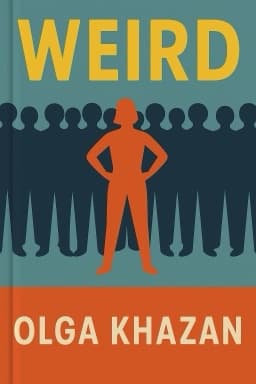
Why Being the Odd One Out Is Actually Your Secret Superpower
Explore the neuroscience and psychology behind why feeling different hurts—and how that pain can fuel extraordinary personal growth.

Feeling like you don’t fit in can be painful—sometimes painfully so. Neuroscience shows that social exclusion activates the same brain regions as physical pain, making loneliness a visceral experience.
But why does being different hurt so much? Evolutionary psychology suggests that early humans developed an instinctive wariness of outsiders to avoid disease and danger. This behavioral immune system still influences our reactions today, often manifesting as prejudice and exclusion.
Social norms act as invisible rules that govern behavior, promoting conformity and punishing deviation. Cultures vary in how tightly they enforce these norms, affecting how much difference is tolerated. Tight cultures may protect order but limit creativity, while loose cultures foster diversity but risk chaos.
Understanding these dynamics helps us see that exclusion is not merely personal but systemic. The minimal group paradigm reveals how easily arbitrary group distinctions spark favoritism and prejudice, highlighting the fragility of social acceptance.
Yet, the story is not one of despair. Connection, kindness, and purpose provide powerful healing. Acts of kindness reduce social anxiety; communities of similar others offer safe spaces; and embracing discomfort builds resilience.
By reframing difference as a source of strength and learning to navigate social norms with courage, anyone can transform their experience of being the odd one out into a secret superpower.
Want to explore more insights from this book?
Read the full book summary