
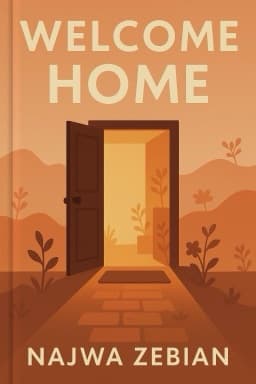
Unlocking Your Inner Sanctuary: The Transformative Power of ‘Welcome Home’ by Najwa Zebian
Discover how Najwa Zebian’s poetic guide leads you on a soul-stirring journey to build a home within yourself, fostering self-love, forgiveness, and authentic living.

Introduction: The Journey to Building Your Inner Home
In a world that often feels chaotic and disconnected, Najwa Zebian’s 'Welcome Home' offers a beacon of hope and a roadmap to reclaiming your inner peace. The book’s metaphor of building a home within yourself is powerful because it transforms the abstract journey of self-healing into a tangible process. Imagine constructing rooms where self-love, forgiveness, and compassion reside—each carefully crafted to protect and nurture your soul.
Self-Acceptance as the Foundation
Before any room can be built, the foundation must be laid. Zebian emphasizes that self-acceptance is the bedrock of this foundation. Accepting yourself fully, without judgment or conditions, creates stability for all other growth. This means embracing imperfections and rejecting societal labels that limit your sense of worth. Without this foundation, the house you build is vulnerable to the storms of doubt and external validation.
Self-Love: More Than Pampering
Moving into the heart of the home, Zebian redefines self-love as a consistent, mindful practice rather than occasional indulgences. She highlights the unique challenges faced by empaths, who absorb others’ emotions and must protect their energy intentionally. Visualizing protective boundaries and learning to say no are essential acts of self-love. This section encourages readers to answer their own call for love instead of seeking validation externally.
Forgiveness: Freedom From Emotional Chains
One of the most transformative rooms is forgiveness. Zebian teaches that forgiveness is not about excusing harm but about reclaiming your power and freeing yourself from pain. Waiting for apologies delays healing; forgiveness is a personal act of liberation. Recognizing that pain often echoes past wounds allows for compassionate self-forgiveness, which is necessary to move beyond guilt and shame.
Compassion and Boundaries: The Heart’s Bridge
Compassion extends beyond self-love to include others, but Zebian stresses the importance of boundaries in maintaining emotional safety. Boundaries are fences, not walls, protecting what you value. They enable selective compassion, welcoming only those who respect your authentic self. This balance nurtures healthy relationships and inner peace.
Clarity, Surrender, and the Dream Garden
Further chapters explore unveiling your authentic self by challenging imposed labels and trusting intuition. Confusion is reframed as a necessary step toward clarity. Surrendering to emotions, rather than resisting them, allows feelings to flow and heal. The Dream Garden metaphor encourages reconnecting with childhood dreams and living authentically beyond societal timelines.
The Art of Listening to Yourself and Adapting to Change
Zebian emphasizes that listening to your inner voice is a learned skill requiring practice and patience. Quieting external noise and internal doubt strengthens self-trust. Living authentically means embracing change as growth and attracting genuine connections aligned with your true self.
Conclusion: The Journey Continues
The final section celebrates the ongoing nature of building your inner home. Welcoming yourself is a transformative act that anchors you in belonging and peace. The journey is lifelong, filled with continual growth, healing, and expansion.
Najwa Zebian’s 'Welcome Home' is a deeply poetic, practical, and hopeful guide that resonates with readers seeking to heal, grow, and live authentically. Its rich metaphors, combined with actionable insights, make it a treasured companion on the path to self-love and belonging.
For further perspectives and reader experiences, explore reviews and discussions on Goodreads, Amazon, and social media platforms where the book has inspired thousands worldwide. 2 3 4
Want to explore more insights from this book?
Read the full book summary