
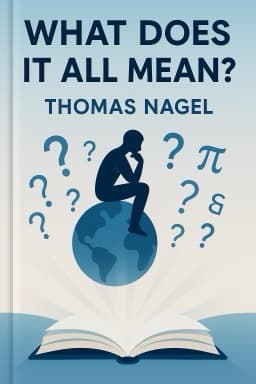
Are You Really Free? The Surprising Truth About Free Will and Determinism in Nagel’s Philosophy
Discover the philosophical debate that questions whether your choices are truly your own.
Every day, we make countless choices — what to eat, where to go, how to act. Intuitively, we believe these choices are free, that we could have done otherwise. But Thomas Nagel invites us to question this assumption deeply.
Determinism posits that every event, including human decisions, is the inevitable result of prior causes. Imagine a row of dominoes falling — each one knocks over the next with no chance for deviation. If this applies to your brain and decisions, then your choice to have chocolate cake was already set in motion long before you entered the room.
This view challenges the idea of moral responsibility. If you could not have chosen differently, can you be praised or blamed for your actions? Would punishment be just, or merely a response to natural events beyond control? These questions shake the foundations of ethics and law.
On the other hand, indeterminism introduces randomness or chance into the equation. But randomness is no guarantee of freedom either. Imagine your choice being decided by a roll of dice — would that be responsible or meaningful?
Nagel’s reflections reveal the complexity of free will, showing that neither determinism nor indeterminism offers a simple escape from philosophical puzzles. This paradox invites us to rethink what it means to be an agent and how we hold ourselves and others accountable.
Understanding this debate enriches our grasp of morality, justice, and personal identity. It encourages humility and curiosity about the nature of human freedom, a question that remains as vital today as ever.
Want to explore more insights from this book?
Read the full book summary