
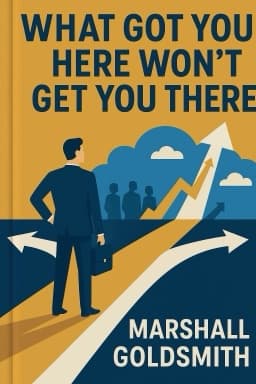
Why Your Greatest Strengths Might Be Your Biggest Roadblocks: Lessons from Marshall Goldsmith
Unlocking the Invisible Barriers to Your Next Level of Success

Unlocking the Invisible Barriers to Your Next Level of Success
What if the very skills and habits that propelled you to the top are now quietly working against you? Marshall Goldsmith’s celebrated book, What Got You Here Won’t Get You There, delivers a powerful message: success breeds its own set of challenges, and the habits that once served us can become the obstacles we least expect.
Goldsmith, a world-renowned executive coach, identifies a subtle trap: as we rise in our careers, we often become less receptive to feedback and more attached to our ways of working. This isn’t arrogance—it’s human nature. Our brains are wired to protect our egos, especially when we’ve tasted success. But unchecked, this tendency creates blind spots that can stall our growth and damage our relationships.
Consider the executive who always needs to win. In the early days, this drive may have fueled their rise. But at the top, it morphs into a compulsion that alienates colleagues and stifles collaboration. Or the manager who prides herself on always adding value—her intention is good, but her constant input leaves her team feeling undervalued and disengaged.
Goldsmith’s research and coaching experience reveal that these aren’t isolated quirks; they’re universal patterns. In fact, he outlines 20 workplace habits that regularly derail high performers: from passing judgment and failing to give proper recognition, to refusing to express regret or listen. These habits are often invisible to the person displaying them but glaringly obvious to everyone else.
Why do we cling to these behaviors? Goldsmith points to four core beliefs that drive successful people: I have succeeded, I can succeed, I will succeed, and I choose to succeed. These beliefs are double-edged swords—they fuel ambition but also breed overconfidence, making us less likely to listen, adapt, or admit when we’re wrong.
The solution isn’t more willpower or ambition; it’s self-awareness, humility, and a willingness to change. Goldsmith’s process begins with seeking honest feedback—not just from superiors, but from peers and subordinates. He champions the power of apology, not as an admission of weakness, but as a bridge to rebuild trust.
Change, Goldsmith argues, must be visible. Leaders who announce their commitment to change, thank those who help them, and regularly follow up are far more likely to succeed. This process, called “feedforward”, focuses on solutions and the future, not blame or the past.
Ultimately, What Got You Here Won’t Get You There is a call to action for anyone who wants to keep growing. The journey is not about abandoning your strengths but recognizing when they become liabilities. It’s about building structures—routines, reminders, and accountability—that support lifelong improvement.
Whether you’re leading a global company or navigating your own personal crossroads, Goldsmith’s wisdom is clear: the next level of success is unlocked not by doing more, but by letting go—of ego, of old habits, and of the need to always be right.
Remember, your journey doesn’t end at the summit. In fact, that’s where the real adventure begins.
References: Goldsmith, M. (2007). What Got You Here Won’t Get You There; James Clear Book Summaries; LinkedIn Reviews.
Want to explore more insights from this book?
Read the full book summary