
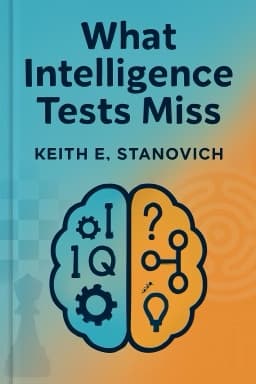
Beyond IQ: The Untapped Power of Rational Thinking in Everyday Life
How teaching rational thinking can revolutionize education and personal growth.

Traditional education has long emphasized intelligence as measured by IQ, focusing on memorization, problem-solving, and academic achievement. Yet, research reveals that this focus misses a vital component: rational thinking skills that govern how we apply knowledge and make decisions.
Mindware gaps—missing rules and strategies such as understanding probability or logical reasoning—are common barriers to rational thought. Equally problematic is contaminated mindware, where students may hold misconceptions, biases, or superstitions that distort learning.
By integrating rationality training into education, we can equip learners with the tools to recognize cognitive biases, evaluate evidence critically, and make reasoned decisions. This approach not only improves academic performance but also prepares individuals to navigate complex real-world problems.
Programs that foster reflective thinking and metacognition help students develop dispositions to question assumptions and revise beliefs. Such training has been shown to reduce susceptibility to biases like confirmation bias and framing effects.
Beyond schools, workplaces can benefit from rationality education to enhance decision making, reduce costly errors, and promote innovation.
Ultimately, valuing and teaching rationality alongside intelligence promises a more holistic approach to cognitive development, empowering individuals and society alike.
Sources: Project Syndicate, Amazon reviews, New York Times, Goodreads 3 1 4 2
Want to explore more insights from this book?
Read the full book summary