
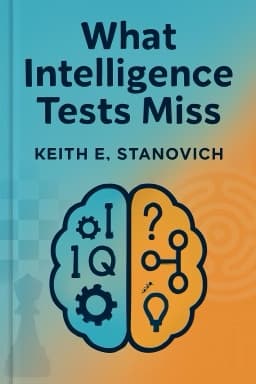
Think Smarter, Not Just Harder: The Science Behind Rational Decision Making
Why mental shortcuts can deceive you and how to sharpen your critical thinking skills.

Have you ever wondered why you sometimes make decisions that seem perfectly logical one moment but puzzling the next? The answer lies in how our brains manage the constant flood of information. We are cognitive misers—our minds work hard to conserve mental energy by relying on shortcuts called heuristics. While these shortcuts help us navigate daily life efficiently, they can also lead us into traps of irrationality.
Heuristics like availability, where we judge the likelihood of events based on how easily examples come to mind, or anchoring, where initial information unduly influences our estimates, are double-edged swords. They speed up decisions but introduce systematic errors.
One striking example is the framing effect. Presented with the same choice framed as a gain or a loss, people’s preferences flip. For instance, when told a medical treatment has a 90% survival rate, most people feel optimistic. But if told it has a 10% mortality rate, they become risk-seeking or avoidant depending on context, even though the facts are identical.
Understanding these cognitive tendencies is the first step toward improving rationality. By becoming aware of mental shortcuts and deliberately engaging our reflective mind, we can mitigate biases and make decisions that better align with our goals.
Training in critical thinking, probability, and logic enhances our mindware—the mental software that guides rational thought. Over time, this leads to smarter choices, reduced errors, and greater life satisfaction.
In sum, thinking smarter means not just working harder but understanding how your mind works and learning to guide it wisely.
Sources: New York Times, Amazon reviews, Project Syndicate, Goodreads 4 1 3 2
Want to explore more insights from this book?
Read the full book summary